
 EN
EN
Precision CNC milling has become the backbone of modern manufacturing for industries that demand absolute accuracy and consistency. When components must meet tight tolerances and perform reliably in critical applications, precision CNC milling stands as the gold standard solution. Whether you're developing aerospace parts, medical devices, automotive components, or industrial machinery, understanding the capabilities and best practices of precision CNC milling is essential to making informed decisions about your manufacturing strategy.
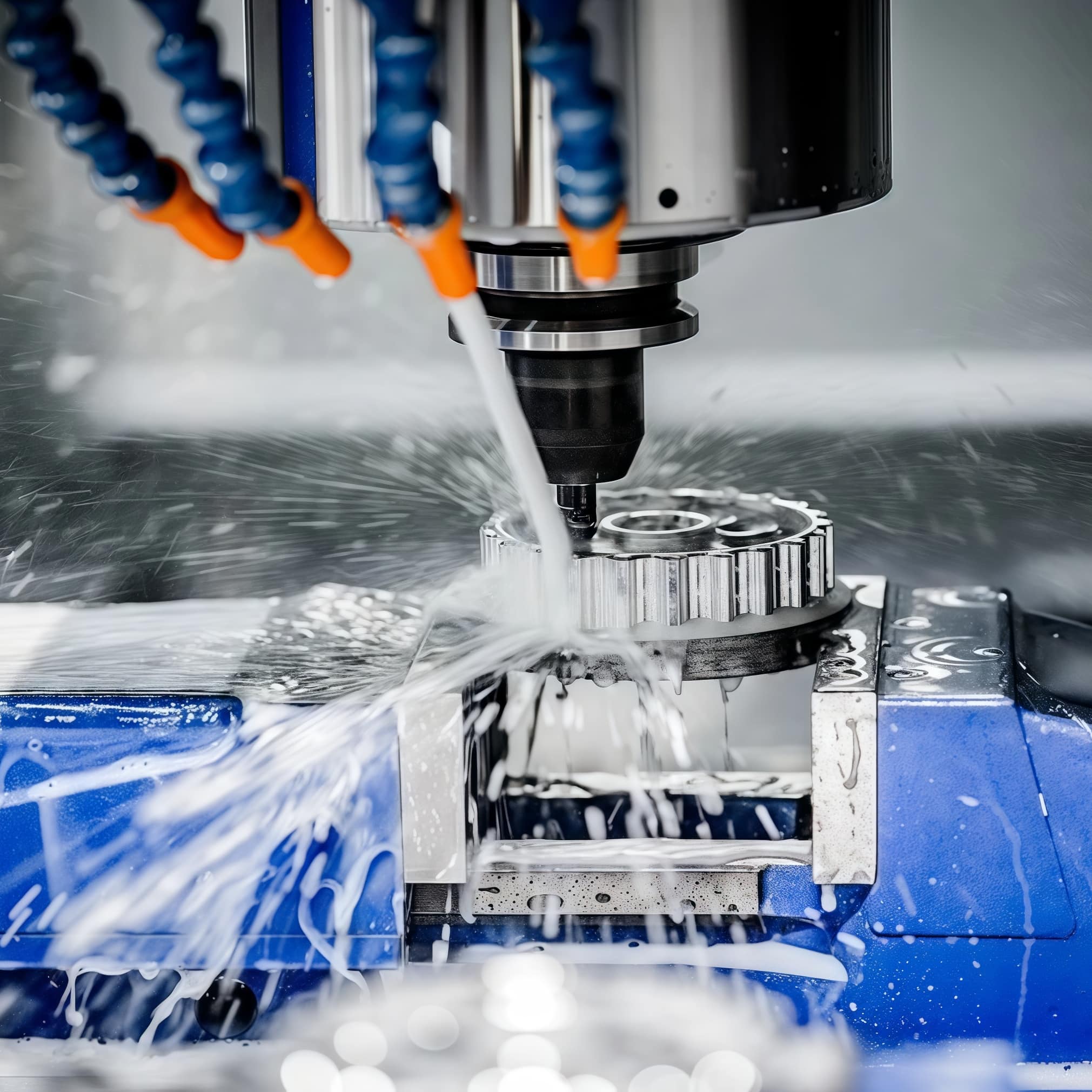
Precision CNC milling represents a significant evolution in manufacturing technology, offering capabilities that manual machining simply cannot achieve. The precision cnc milling process uses computer-controlled cutting tools to remove material from a workpiece with micron-level accuracy, enabling manufacturers to create components that fit seamlessly into complex assemblies. This level of precision translates directly into reduced waste, lower assembly costs, and enhanced product performance in high-stakes applications where failure is not an option.
Understanding Precision CNC Milling Fundamentals
What Defines Precision CNC Milling
Precision CNC milling distinguishes itself from standard milling through its combination of advanced equipment, rigorous control systems, and specialized expertise. The precision cnc milling process operates on three-axis, five-axis, or multi-axis platforms, each capable of producing tolerances down to plus or minus 0.0005 inches or better, depending on material and geometry. Precision CNC milling encompasses technologies such as high-speed spindles, precision spindle bearings, advanced servo motors, and real-time monitoring systems that continuously verify dimensional accuracy throughout the cutting process.
The distinction between standard CNC milling and precision CNC milling lies in the control methodology and quality verification protocols. Precision CNC milling requires dedicated facilities with climate control, vibration isolation, and measurement equipment such as coordinate measuring machines that validate every critical dimension. Manufacturers offering precision CNC milling invest heavily in preventive maintenance, tool calibration, and operator training to ensure every part meets or exceeds specified tolerances.
Core Capabilities of Precision CNC Milling
Modern precision CNC milling capabilities extend far beyond simple rectangular cuts. Precision cnc milling systems can produce complex geometries including undercuts, internal cavities, angled surfaces, and threaded features all within a single setup. Advanced precision CNC milling equipment handles a wide range of materials including aluminum alloys, stainless steel, titanium, nickel superalloys, and engineering polymers, each presenting unique challenges that experienced operators understand and manage effectively.
The depth of precision CNC milling expertise becomes evident when examining five-axis capability, which allows cutting tools to approach a workpiece from multiple angles without repositioning. This capability of precision CNC milling reduces setup time, improves surface finish, and enables manufacturers to create geometries impossible on three-axis machines. Multi-axis precision cnc milling also minimizes handling, which reduces the risk of dimensional variation and improves overall accuracy.
Quality Standards and Tolerance Management in Precision CNC Milling
Establishing Tolerance Benchmarks
Achieving high-tolerance components through precision CNC milling requires understanding that tolerance management begins during design and continues through material selection, tooling strategy, and final verification. Precision CNC milling operations targeting tolerances below 0.001 inches demand specialized fixturing, calibrated tools, and controlled environmental conditions. The process of precision cnc milling at these levels requires measuring tools such as air gauges, dial indicators, and laser measurement systems to verify accuracy during production.
Manufacturers practicing precision CNC milling at the highest levels implement documented procedures for tool wear monitoring, spindle speed optimization, and feed rate calibration. Precision cnc milling protocols include statistical process control methods that track dimensional trends and trigger corrective actions before parts drift out of tolerance. This proactive approach to precision CNC milling prevents scrap and rework, making it the most cost-effective path to quality.
Material Considerations in Precision CNC Milling
Different materials behave differently during precision CNC milling, and material selection directly impacts achievable tolerances and production timelines. Aluminum represents an ideal material for precision cnc milling because of its low hardness, excellent machinability, and fast cutting speeds, which reduce thermal growth and dimensional variation. Conversely, materials like titanium and nickel superalloys used in aerospace applications demand specialized tooling and slower speeds when performing precision CNC milling, but the outcome justifies the extended cycle time.
The relationship between material properties and precision cnc milling success extends to surface finish specifications as well. Precision CNC milling of hardened steel requires different strategies than precision cnc milling of aluminum, with each material demanding optimized tool geometry, coolant selection, and feed rates. Understanding these material-specific requirements separates precision CNC milling operations that consistently deliver specification compliance from those that struggle with scrap and rework costs.
Applications and Industry-Specific Uses of Precision CNC Milling
Aerospace and Defense Applications
Aerospace manufacturers rely on precision CNC milling to produce components including engine housings, structural brackets, and hydraulic manifolds that must withstand extreme stress and environmental conditions. Precision cnc milling in aerospace applications must comply with rigorous standards such as AS9100 and NASA requirements, with every component requiring full traceability and documented proof of conformance. The stakes in aerospace precision CNC milling are extraordinarily high, as component failure during flight creates unacceptable safety risks.
Precision CNC milling for defense applications faces similar demands but extends to include rapid design changes, small lot production, and exotic material requirements. Manufacturers supporting the defense industry through precision cnc milling must demonstrate capability with titanium grade 5, aluminum alloys, and specialty superalloys while maintaining security protocols and documentation standards. The precision CNC milling capability to produce prototype and low-volume production runs makes it invaluable for defense contractors.
Medical Device Manufacturing
Medical device manufacturers depend on precision CNC milling to create surgical instruments, implant components, and diagnostic equipment that directly impact patient safety and treatment outcomes. Precision cnc milling for medical applications must meet FDA requirements, biocompatibility standards, and sterile processing compatibility. Components produced through precision CNC milling for medical use frequently require surface finishes below 32 microinches and tolerances of 0.001 inch or tighter.
The regulatory environment surrounding precision CNC milling for medical devices demands comprehensive documentation, validation protocols, and process capability studies. Every component produced through precision cnc milling for medical applications undergoes 100 percent inspection using coordinate measuring machines or specialized gauges. The convergence of technical precision requirements and regulatory compliance makes medical device precision CNC milling one of the most demanding segments of manufacturing.
FAQ
What tolerances can precision CNC milling consistently achieve?
Precision CNC milling can consistently achieve tolerances ranging from plus or minus 0.001 inch on standard setups to plus or minus 0.0005 inch or better on specialized five-axis equipment with optimal material and geometry conditions. The realistic tolerance capability depends on multiple factors including machine rigidity, tool geometry, workpiece material, and part geometry complexity. Manufacturers experienced in precision cnc milling understand these variables and can advise on achievable tolerances during the design and quoting phase.
How does precision CNC milling differ from conventional CNC milling?
Precision CNC milling differs from conventional CNC milling through superior machine construction, advanced control systems, real-time feedback verification, and rigorous quality protocols. Conventional CNC milling typically operates at tolerances of 0.005 inch or wider, while precision cnc milling targets tolerances of 0.001 inch or tighter through investment in dedicated equipment and skilled operator expertise. The higher precision CNC milling capability comes with extended lead times and premium pricing, but delivers reliability critical to demanding applications.
Why should companies choose precision CNC milling for high-tolerance components?
Companies should choose precision cnc milling for high-tolerance components because the investment in capability directly reduces assembly costs, improves product performance, and eliminates reliability risks associated with out-of-tolerance parts. Precision CNC milling ensures first-pass fit in complex assemblies, reduces scrap and rework costs, and provides documented proof of conformance for regulated industries. The long-term business case for precision cnc milling becomes overwhelming when considering total cost of ownership across product lifecycle.