
 EN
EN
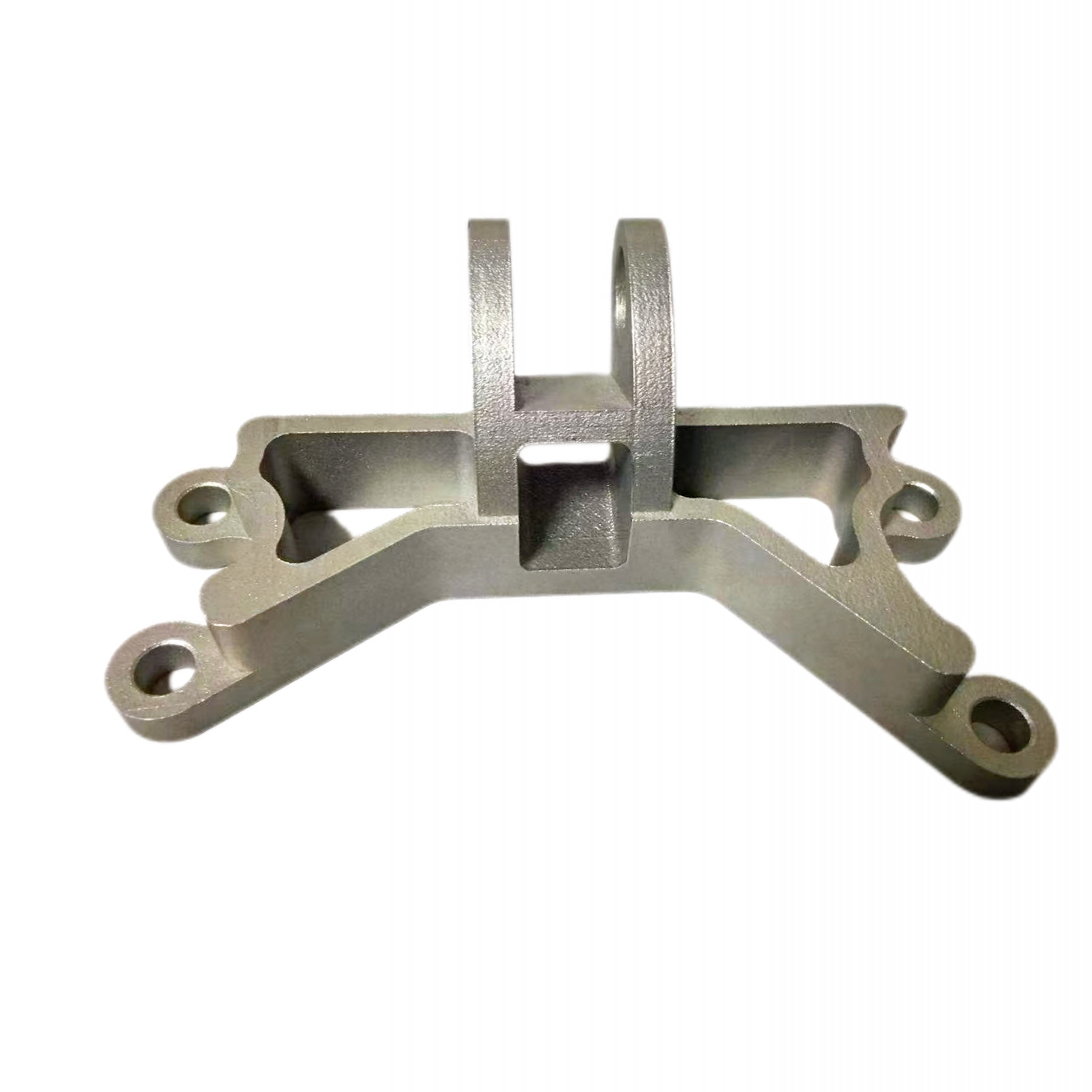
Advanced post-processing represents a critical transformation stage for parts created through industrial 3D printing service. Raw additive-manufactured components emerge from production with surface roughness, support mark residue, and dimensional variations that limit their functional and aesthetic value. Modern industrial 3D printing service providers recognize that comprehensive post-processing turns these intermediate outputs into components meeting engineering specifications, regulatory compliance, and market-ready standards. The finishing workflow combines mechanical refinement, chemical treatment, quality verification, and final inspection to bridge the gap between raw print output and deployable industrial components.

The value of industrial 3D printing service extends far beyond initial fabrication. Strategic post-processing directly impacts dimensional accuracy, mechanical properties, surface finish quality, and long-term performance reliability. Organizations leveraging industrial 3D printing service capabilities understand that finishing operations determine whether prototypes succeed in functional testing, withstand production environments, and demonstrate readiness for commercialization. This comprehensive guide explores advanced post-processing methodologies, equipment integration, quality assurance protocols, and practical workflows that maximize the potential of your industrial 3D printing service investments.
Surface Finishing Techniques for Industrial 3D Printing Service
Mechanical Refinement and Abrasive Processing
Mechanical finishing represents the foundational post-processing layer for industrial 3D printing service outputs. Abrasive media processing removes support material evidence, reduces surface irregularities, and establishes dimensional consistency across prototype batches. Media blasting technologies—including bead blasting, glass bead treatment, and ceramic particle systems—deliver controlled material removal without compromising underlying component geometry. Organizations employing industrial 3D printing service workflows typically apply mechanical refinement as the primary finishing stage because it addresses visible surface defects and establishes baseline dimensional accuracy for subsequent processing steps.
Shot peening and vibratory finishing complement abrasive blasting within comprehensive industrial 3D printing service post-processing strategies. Vibratory systems deliver gentle, repeatable finishing across complex internal geometries and intricate feature details that hand processing cannot reliably access. Shot peening imparts compressive stress into surface layers, significantly enhancing fatigue resistance and mechanical durability—a critical capability when industrial 3D printing service prototypes must validate performance under cyclic loading conditions. The selection between mechanical finishing methods depends on material composition, required surface finish specification, component complexity, and performance validation objectives within your industrial 3D printing service program.
Chemical Treatment and Surface Enhancement
Chemical post-processing transforms material surfaces at the molecular level, delivering capabilities unattainable through mechanical means alone. Passivation treatment removes embedded ferrous particles and contamination from stainless steel components produced through industrial 3D printing service, ensuring corrosion resistance and biocompatibility compliance. Anodizing processes create protective oxide layers on aluminum prototypes, simultaneously improving dimensional stability, wear resistance, and aesthetic appearance—all critical considerations when industrial 3D printing service deliverables must perform in aggressive industrial environments or satisfy aesthetic approval milestones.
Etching, electroplating, and specialized coating systems extend the material property envelope available through industrial 3D printing service finishing. These chemical treatments enhance electrical conductivity, improve solderability, provide electromagnetic shielding, or establish specialized surface chemistries matching product specifications. When industrial 3D printing service prototypes require functional validation of coatings, conductive pathways, or thermal management features, strategic chemical post-processing ensures that finished components genuinely represent production-equivalent performance characteristics rather than approximations limited by base material properties alone.
Quality Assurance and Dimensional Verification
Precision Measurement and Tolerance Validation
Rigorous dimensional validation confirms whether post-processed prototypes from industrial 3D printing service meet engineering specifications and design intent. Coordinate measurement machines, optical scanning systems, and advanced metrology equipment quantify dimensional accuracy across critical feature zones, tolerance stack-ups, and geometric relationships. Organizations executing industrial 3D printing service projects implement multi-stage verification: raw part measurement, post-processing dimensional tracking, and final inspection before component release. This systematic approach identifies drift patterns, process capability limitations, and corrective opportunities that continuous industrial 3D printing service refinement can address.
Surface roughness quantification provides objective evidence that mechanical and chemical post-processing achieved target finish specifications. Profilometer measurements document Ra and Rz values across representative component surfaces, confirming that industrial 3D printing service finishing workflows deliver consistent results. When functional validation requires specific tribological, sealing, or bearing surface characteristics, documented surface finish data becomes essential proof that prototypes developed through industrial 3D printing service genuinely replicate production manufacturing conditions. This measurement rigor separates professional industrial 3D printing service execution from expedited approaches that assume finishing adequacy without verification.
Material Property Confirmation and Performance Testing
Post-processing influences mechanical properties significantly, requiring systematic validation that industrial 3D printing service prototypes achieve target strength, ductility, and fatigue performance. Tensile testing, hardness measurement, and fatigue analysis on finished components confirm that mechanical refinement and heat treatment steps preserve or enhance underlying material capabilities. Organizations committed to rigorous industrial 3D printing service workflows incorporate material testing into their validation protocols, recognizing that surface processing can inadvertently introduce stress concentrations or material property variation requiring corrective action.
Functional testing under real-world conditions validates that post-processed prototypes from industrial 3D printing service perform reliably in intended applications. Environmental chamber exposure, accelerated wear testing, chemical immersion, and thermal cycling reveal potential durability concerns that static dimensional analysis cannot detect. When industrial 3D printing service prototypes support critical engineering decisions—from material selection validation to design concept approval—comprehensive performance testing on finished components provides confidence that production versions will meet reliability expectations without costly field failures or recalls.
Workflow Integration and Production Efficiency
Sequential Processing and Schedule Optimization
Strategic sequencing of post-processing operations maximizes efficiency while minimizing component handling and rework risk throughout industrial 3D printing service finishing workflows. Mechanical refinement typically precedes chemical treatment to remove surface contamination and optimize chemical process effectiveness. Heat treatment, when required, occurs after dimensional accuracy verification to prevent post-heat-treatment distortion from corrupting finished dimensions on industrial 3D printing service components. Organizations that implement logical processing sequences through their industrial 3D printing service programs reduce cycle time, minimize defect rates, and improve overall production economics while maintaining quality consistency.
Parallel processing opportunities exist within comprehensive industrial 3D printing service finishing frameworks. While one prototype batch undergoes chemical treatment, additional components can progress through mechanical finishing or dimensional inspection stages. Industrial 3D printing service providers with integrated post-processing infrastructure optimize throughput by maintaining balanced workflow stages, preventing bottlenecks, and ensuring predictable delivery timelines. This operational sophistication distinguishes enterprise-class industrial 3D printing service capabilities from basic additive manufacturing facilities lacking integrated finishing infrastructure.
Technology Infrastructure and Equipment Selection
Investing in dedicated post-processing equipment amplifies the capabilities and economics of industrial 3D printing service programs. Automated finishing systems, precision heat treatment furnaces, and integrated measurement solutions reduce labor dependency, improve consistency, and enable batch processing efficiency. Organizations expanding industrial 3D printing service capabilities typically prioritize equipment matching their material portfolio—aluminum finishing systems, stainless steel processing capability, and polymer-compatible equipment address the material diversity common in prototype development. This infrastructure investment transforms industrial 3D printing service from experimental rapid prototyping into reliable manufacturing process capable of supporting design validation, risk reduction, and accelerated product development cycles.
Technology selection within industrial 3D printing service finishing reflects both current program requirements and future capability expansion strategy. Modular equipment systems, scalable processing capacity, and multi-material compatibility provide strategic flexibility as industrial 3D printing service scope expands across product platforms and manufacturing challenges. Organizations that anticipate evolving prototype complexity, increasing production volumes, or broadened material requirements build post-processing infrastructure with growth capacity, avoiding future equipment replacement and process disruption.
FAQ
How does post-processing impact the cost-effectiveness of industrial 3D printing service projects?
Post-processing costs represent a significant fraction of total industrial 3D printing service expenses, typically ranging from 20 to 50 percent of finished component cost depending on complexity, material, and finish specifications. However, strategic post-processing delivers exceptional cost efficiency compared to alternative prototype manufacturing methods because industrial 3D printing service eliminates tooling requirements, supports design iteration without retooling, and enables rapid finishing cycle times. Organizations that optimize post-processing workflows—through equipment automation, process standardization, and batch efficiency—minimize per-unit finishing costs while maximizing prototype quality and functional validation capability. The decision to invest in comprehensive industrial 3D printing service post-processing infrastructure typically pays returns through reduced prototype development cycles, improved first-pass design validation success, and accelerated time-to-market advantages that outweigh incremental finishing costs.
What material systems benefit most from advanced post-processing within industrial 3D printing service workflows?
Metal-based industrial 3D printing service applications derive maximum value from advanced post-processing because additive manufacturing metal components exhibit surface roughness, porosity, and residual stress characteristics requiring systematic finishing attention. Aluminum, stainless steel, and titanium prototypes produced through industrial 3D printing service achieve production-equivalent mechanical properties and environmental durability only after comprehensive post-processing—including stress relief heat treatment, surface refinement, and corrosion protection treatments. Conversely, polymer-based industrial 3D printing service often requires less intensive post-processing, though functional applications frequently demand chemical smoothing, dimensional refinement, or specialized coatings. Engineers selecting industrial 3D printing service material systems should evaluate post-processing requirements and available capability as integral factors in material selection strategy, ensuring that chosen systems offer post-processing options matching their functional validation requirements and production environment specifications.
Can industrial 3D printing service post-processing replicate production manufacturing surface finish and material properties?
Advanced industrial 3D printing service post-processing approaches production-equivalent surface finish and mechanical properties through systematic methodology, though perfect replication across all characteristics remains challenging. Mechanical and chemical finishing techniques achieve production-comparable surface roughness, corrosion resistance, and dimensional accuracy, making industrial 3D printing service prototypes credible performance proxies for manufactured production components. However, certain manufacturing characteristics—including microstructural homogeneity, grain structure benefits from specific forming processes, and surface integrity from production cutting operations—occur naturally through conventional manufacturing but require intentional post-processing intervention within industrial 3D printing service workflows. Strategic organizations recognize this distinction and select industrial 3D printing service manufacturing methods and post-processing strategies specifically matched to their functional validation requirements, ensuring that prototypes test the characteristics most critical to production performance while acknowledging that complete manufacturing replication may exceed prototype development budget and timeline constraints.
Table of Contents
- Surface Finishing Techniques for Industrial 3D Printing Service
- Quality Assurance and Dimensional Verification
- Workflow Integration and Production Efficiency
-
FAQ
- How does post-processing impact the cost-effectiveness of industrial 3D printing service projects?
- What material systems benefit most from advanced post-processing within industrial 3D printing service workflows?
- Can industrial 3D printing service post-processing replicate production manufacturing surface finish and material properties?