
 EN
EN
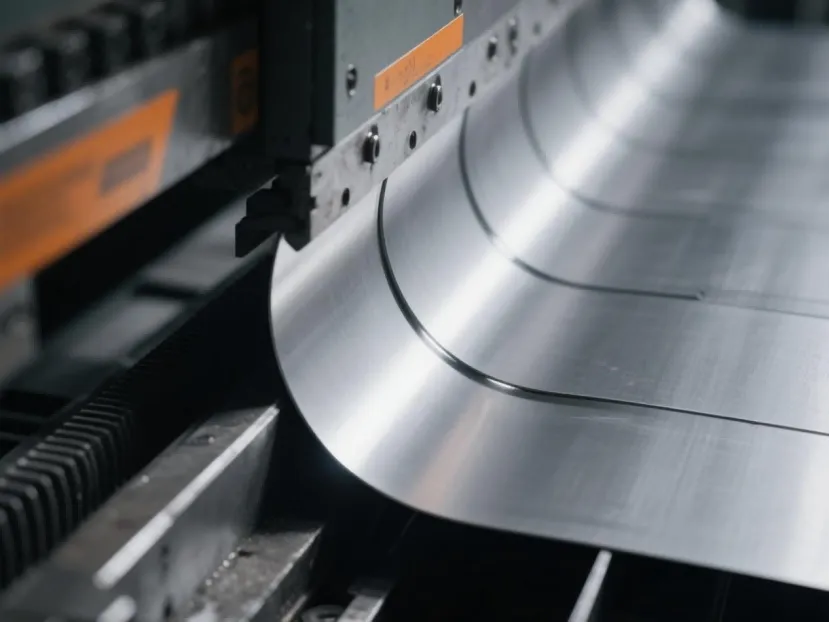
Sheet metal fabrication has become the backbone of modern manufacturing across industries ranging from aerospace to automotive, electronics to appliance production. Advanced stamping and bending techniques represent the most critical processes within sheet metal fabrication, enabling manufacturers to transform flat metal stock into precisely engineered components with tight tolerances and complex geometries. These processes combine decades of engineering knowledge with cutting-edge machinery to deliver parts that meet the most demanding specifications in today's competitive marketplace.
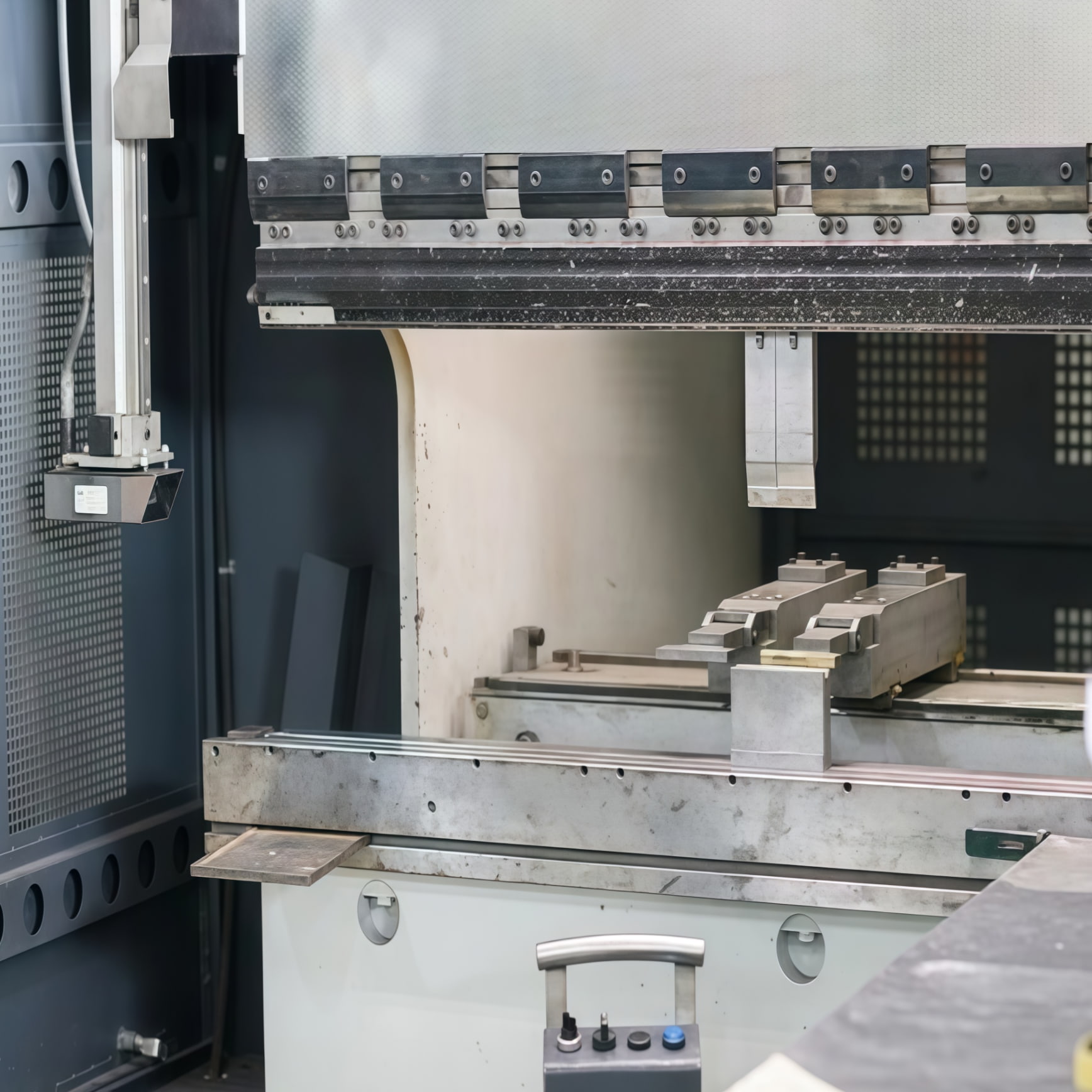
Understanding the distinction between stamping and bending is essential for anyone involved in sheet metal fabrication operations. While these processes are often used together within a single production workflow, each technique serves unique purposes and requires different machinery, tooling, and expertise. Stamping creates patterns, shapes, and embossed details through high-pressure die operations, whereas bending achieves angles and curved forms by applying controlled force to sheet metal. When integrated strategically, advanced stamping and bending in sheet metal fabrication deliver components that are both functionally superior and cost-effective at scale.
The Fundamentals of Advanced Stamping in Sheet Metal Fabrication
Understanding Progressive Stamping Operations
Progressive stamping represents one of the most efficient methodologies within sheet metal fabrication for high-volume production. In this process, a continuous strip of metal moves through multiple stations within a single tool, with each station performing a specific operation such as cutting, forming, or punching. Sheet metal fabrication shops utilizing progressive stamping achieve remarkable speed and consistency because each part undergoes identical operations in sequence. The coil or strip advances automatically after each stroke, allowing sheet metal fabrication facilities to produce thousands of identical components per hour while maintaining exceptional precision.
The design complexity possible through progressive stamping within sheet metal fabrication has expanded significantly with modern technology. Engineers can now incorporate multiple features—holes, slots, dimples, and flanges—into a single progressive stamping tool, which sheet metal fabrication operations complete in one integrated pass. This integration reduces the need for secondary operations, minimizing handling and the risk of damage. Sheet metal fabrication professionals recognize that progressive stamping tooling represents a substantial capital investment, making it most economical for production runs exceeding 100,000 pieces annually, though smaller custom sheet metal fabrication projects may still benefit from simplified stamping approaches.
Fine Blanking and Precision Edge Quality
Fine blanking stands as a premium technique within sheet metal fabrication that produces exceptionally clean edges without requiring secondary finishing. Unlike conventional stamping where sheet metal fabrication edges may show slight roughness or deformation, fine blanking in sheet metal fabrication operates under extreme pressure using specially designed dies that virtually eliminate material distortion. This advanced sheet metal fabrication method proves invaluable when parts will undergo electroplating, welding, or stress-critical applications where edge quality directly impacts performance or aesthetics.
The economics of fine blanking within sheet metal fabrication depend heavily on part geometry and production volume. Sheet metal fabrication operations investing in fine blanking equipment gain competitive advantages in industries such as automotive, where appearance and dimensional accuracy create brand differentiation. While fine blanking adds cost per piece compared to conventional sheet metal fabrication stamping, it often eliminates expensive finishing steps downstream, justifying the investment for sophisticated sheet metal fabrication manufacturers.
Advanced Bending Techniques in Sheet Metal Fabrication
Press Brake Technology and Programmable Precision
Modern press brakes have revolutionized how sheet metal fabrication shops achieve consistent, repeatable bends across varied components. CNC-controlled press brakes allow sheet metal fabrication operators to program bend angles, dwell times, and backgauge positions with micrometer-level accuracy. Sheet metal fabrication technology has evolved to include real-time feedback systems that monitor tonnage and position, ensuring that each bend in every piece of sheet metal fabrication output matches the specification exactly. This precision becomes especially critical when sheet metal fabrication requires multiple bends on a single part, as cumulative tolerances can quickly compound without advanced control systems.
The relationship between material properties and bending performance within sheet metal fabrication cannot be overstated. Different alloys, tempers, and thicknesses behave uniquely when subjected to bending forces during sheet metal fabrication processes. Sheet metal fabrication engineers must account for springback—the tendency of bent metal to partially return to its original shape—by over-bending slightly or using compensating techniques. Advanced sheet metal fabrication facilities maintain detailed material libraries and historical bend data, enabling sheet metal fabrication professionals to predict springback accurately and minimize scrap rates.
Complex Geometry and Multi-Directional Bending
Sheet metal fabrication capabilities have expanded dramatically to include three-dimensional bends and complex geometries that previously seemed impossible. Some advanced sheet metal fabrication shops now employ robotic press brakes that can position parts in multiple orientations, enabling sequential bends in different planes without manual repositioning. This innovation in sheet metal fabrication dramatically improves accuracy and reduces production time for intricate components. Industries such as aerospace, medical device manufacturing, and high-end automotive increasingly demand such sophisticated sheet metal fabrication capabilities.
Tube bending and roll forming represent specialized sheet metal fabrication techniques that extend beyond traditional flat-stock bending. Sheet metal fabrication operations using roll forming create channels, hat sections, and tubular shapes through continuous pressure application as material passes through matched rollers. These advanced sheet metal fabrication methods excel at producing consistent profiles at high speeds, making them ideal for applications requiring identical cross-sections across extended lengths. Sheet metal fabrication professionals recognize that selecting the appropriate bending technique requires deep understanding of both part requirements and production economics.
Integrated Stamping and Bending Workflows in Sheet Metal Fabrication
Design Optimization for Combined Processes
Modern sheet metal fabrication design must account for the interaction between stamping and bending operations to achieve optimal results. Engineers designing parts for sheet metal fabrication increasingly collaborate with manufacturing specialists to ensure that features created through stamping will not interfere with subsequent bending operations. Sheet metal fabrication analysis software now allows designers to simulate the complete manufacturing workflow, identifying potential problems before tooling is fabricated. This proactive approach to sheet metal fabrication design significantly reduces scrap and rework costs while accelerating time-to-production.
Material flow and stress distribution become critical considerations when sheet metal fabrication requires both stamping and bending on the same component. A stamped feature that creates material thickness variation will affect how the part behaves when bent, potentially causing cracking or inconsistent geometry. Advanced sheet metal fabrication professionals use finite element analysis to predict material behavior through stamping and subsequent bending operations, optimizing part geometry and process parameters. This sophisticated approach to sheet metal fabrication ensures that both aesthetic and functional requirements are met consistently.
Quality Control and Tolerance Management
Sheet metal fabrication operations combining stamping and bending must implement comprehensive quality systems to control cumulative tolerances. Each operation in sheet metal fabrication introduces potential variation, and without careful monitoring, these variations accumulate, potentially causing assemblies to fail. Advanced sheet metal fabrication facilities employ statistical process control, maintaining real-time monitoring of key dimensions and automatically adjusting processes when drift occurs. This data-driven approach to sheet metal fabrication ensures that customer specifications are consistently met while minimizing expensive scrap.
Documentation and traceability are increasingly important in regulated industries where sheet metal fabrication components become part of safety-critical assemblies. Modern sheet metal fabrication operations maintain detailed records linking each component to the specific tool setup, material lot, and process parameters used during its production. This comprehensive documentation of sheet metal fabrication processes enables rapid response if issues are identified after delivery, protecting both customer confidence and brand reputation.
FAQ
What distinguishes sheet metal fabrication from other metal forming processes?
Sheet metal fabrication specifically addresses flat or coiled metal that is typically between 0.006 and 0.25 inches thick, using techniques like stamping, bending, and forming. Other metal fabrication processes may involve casting, forging, or machining, each suited to different material thicknesses and production volumes. Sheet metal fabrication excels at creating lightweight, complex parts at high speeds with minimal material waste, making it ideal for mass production of detailed components. The choice between sheet metal fabrication and alternative processes depends on required thickness, production quantity, complexity, and cost targets.
How do manufacturers choose between stamping and bending for a specific component?
Manufacturers evaluate whether a component requires sheet metal fabrication stamping, bending, or both based on its geometry, functional requirements, and production volume. Features that add depth, create raised patterns, or require significant shape redistribution typically demand stamping within sheet metal fabrication workflows. Conversely, angular features and simple shape changes often utilize bending operations within sheet metal fabrication processes. Sheet metal fabrication engineers frequently use both techniques in sequence, with stamping creating primary features and bending adding dimensional complexity, resulting in higher-value finished components.
What role does material selection play in sheet metal fabrication success?
Material selection profoundly impacts sheet metal fabrication outcomes, as different alloys exhibit varying formability, springback characteristics, and mechanical properties. Aluminum offers excellent weight-to-strength ratios for sheet metal fabrication aerospace applications but requires different tooling and bend angles than steel. Stainless steel demands more powerful equipment within sheet metal fabrication operations but provides superior corrosion resistance for food service and medical applications. Sheet metal fabrication engineers must match material properties to both functional requirements and manufacturing capabilities, ensuring that selected materials can be reliably processed through planned stamping and bending operations while meeting cost targets.