
 EN
EN

The holiday season presents unprecedented opportunities for businesses to capture consumer attention through innovative product displays and promotional materials. Advanced manufacturing technologies have revolutionized how companies create compelling visual merchandising, with stereolithography leading the charge in producing exceptional quality prototypes and display models. Modern retailers and manufacturers are discovering that high-resolution three-dimensional printed objects can significantly enhance their seasonal marketing campaigns while reducing traditional production costs and timeframes.
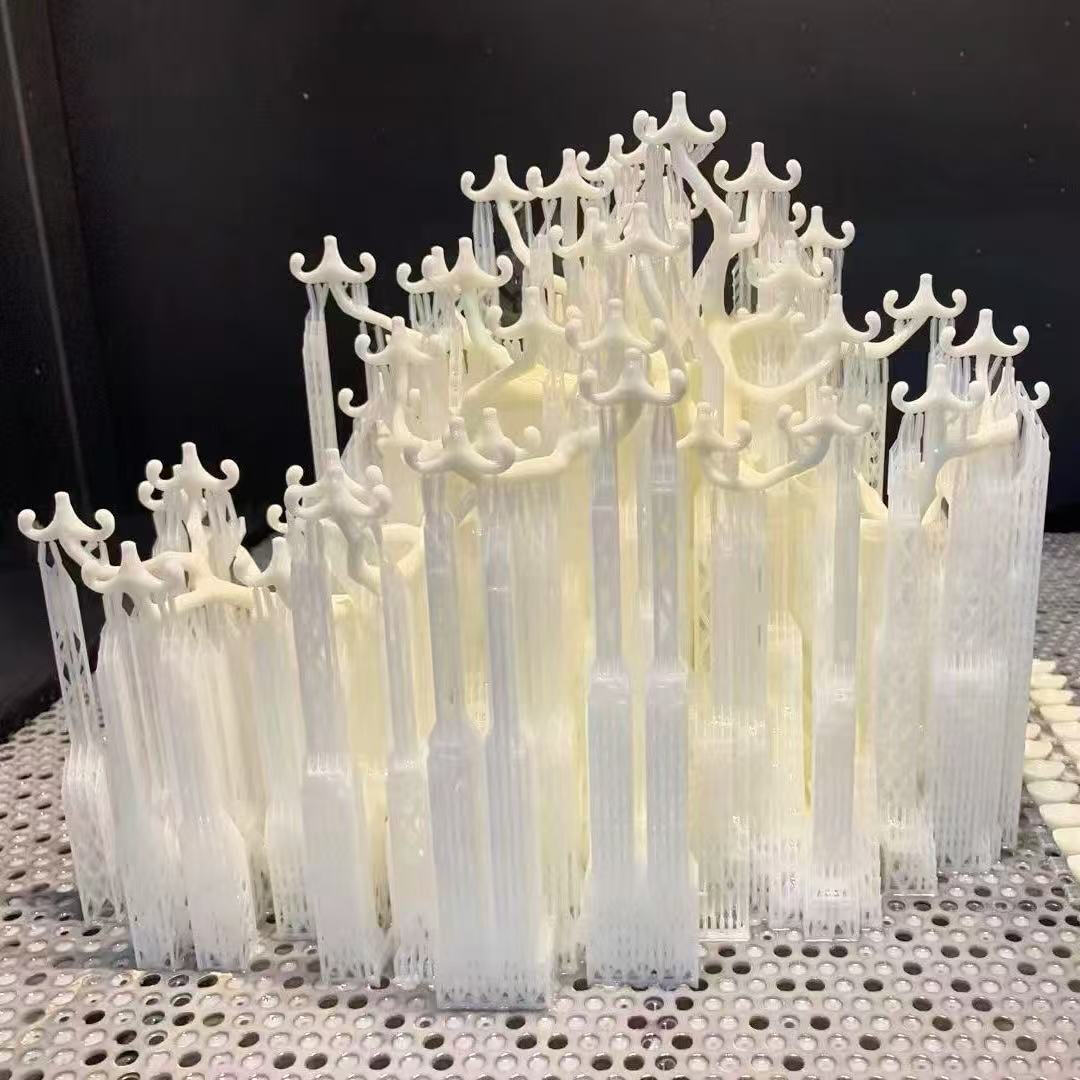
Stereolithography technology offers unmatched precision and surface quality that traditional manufacturing methods struggle to achieve within comparable budgets and schedules. The photopolymerization process creates smooth, detailed surfaces that require minimal post-processing, making it ideal for creating eye-catching holiday displays that capture customer imagination. Businesses across various industries are leveraging this technology to produce everything from architectural models to intricate jewelry prototypes that showcase their products in the most favorable light possible.
Understanding SLA Technology for Commercial Applications
Photopolymerization Process Fundamentals
The stereolithography process relies on precise laser technology to cure liquid photopolymer resins layer by layer, creating solid three-dimensional objects with exceptional accuracy. This additive manufacturing approach allows for the production of complex geometries that would be impossible or prohibitively expensive using traditional subtractive methods. The laser beam follows computer-generated paths, ensuring consistent quality and repeatability across multiple production runs, which is essential for businesses requiring uniform promotional materials.
Modern SLA systems utilize advanced optics and control software to achieve layer resolutions as fine as 25 microns, enabling the creation of intricate details that rival injection-molded parts. The controlled environment within the build chamber ensures optimal curing conditions, while automated resin handling systems minimize material waste and operator intervention. These technological advances have made sla 3d printing more accessible to businesses of all sizes seeking high-quality prototyping and small-batch production solutions.
Material Properties and Selection Criteria
Contemporary photopolymer resins offer diverse mechanical and aesthetic properties tailored to specific application requirements. Standard resins provide excellent dimensional accuracy and smooth surface finishes ideal for visual prototypes and display models, while specialty formulations offer enhanced durability, flexibility, or optical clarity. The selection process involves evaluating factors such as intended use duration, environmental exposure conditions, and desired visual characteristics to ensure optimal performance in holiday marketing applications.
Biocompatible resins have expanded the technology's applicability to consumer products requiring direct skin contact, while flame-retardant formulations meet stringent safety requirements for public display environments. Transparent resins enable the creation of stunning light-transmitting objects that can be incorporated into illuminated displays, while colored resins eliminate the need for additional finishing processes. Understanding these material options empowers businesses to make informed decisions that align with their specific promotional objectives and brand requirements.
Strategic Applications for Holiday Marketing
Product Visualization and Prototyping
Holiday shopping seasons demand compelling product presentations that differentiate offerings from competitors while communicating value propositions effectively. Sla 3d printing enables rapid creation of scaled models, cutaway demonstrations, and interactive prototypes that allow customers to experience products in ways that traditional photography or digital renderings cannot achieve. These tangible representations build consumer confidence and facilitate purchasing decisions by providing tactile engagement opportunities that enhance the overall shopping experience.
Retailers specializing in complex products such as electronics, automotive accessories, or home improvement items benefit significantly from three-dimensional models that clearly illustrate features and benefits. The ability to produce multiple variations quickly allows for A/B testing of different design concepts or configurations before committing to expensive tooling or inventory investments. This iterative approach reduces market risks while ensuring that final products align with consumer preferences identified through direct interaction with physical prototypes.
Custom Display Elements and Fixtures
Creating memorable shopping environments requires attention to every detail, from product placement to ambient lighting and supporting display elements. Stereolithography technology empowers retailers to produce custom fixtures, signage components, and decorative elements that perfectly complement their brand aesthetics and seasonal themes. The precision and finish quality achievable through sla 3d printing rival traditional manufacturing methods while offering unprecedented design flexibility and rapid turnaround times.
Seasonal displays benefit from the ability to incorporate intricate details and complex geometries that would be impractical or cost-prohibitive using conventional fabrication techniques. Holiday-themed elements such as ornate frames, sculptural supports, or interactive demonstration fixtures can be designed specifically for each campaign and produced on-demand to minimize storage requirements. This approach enables retailers to maintain fresh, engaging displays throughout extended holiday seasons while controlling costs and maximizing visual impact.
Production Efficiency and Cost Optimization
Rapid Turnaround and Scalability
Time-sensitive holiday marketing campaigns require manufacturing solutions that can adapt quickly to changing requirements and tight deadlines. Sla 3d printing eliminates traditional tooling requirements and setup costs, enabling production to begin immediately upon design completion. This rapid deployment capability allows businesses to respond to market trends, incorporate last-minute design changes, or scale production volumes based on real-time demand feedback without incurring significant additional costs or delays.
Build platforms can accommodate multiple parts simultaneously, optimizing machine utilization and reducing per-unit costs for larger quantities. The layer-based manufacturing process ensures consistent quality regardless of build complexity or part count, while automated support generation and removal streamline post-processing workflows. These efficiency gains translate directly into cost savings that can be reinvested in additional marketing initiatives or passed along to customers as competitive pricing advantages.
Quality Control and Consistency
Professional sla 3d printing systems incorporate sophisticated monitoring and control mechanisms that ensure consistent output quality across extended production runs. Real-time process monitoring detects potential issues before they affect part quality, while automated calibration procedures maintain optimal system performance throughout demanding production schedules. These quality assurance measures are particularly important for holiday marketing applications where visual appeal and dimensional accuracy directly impact customer perceptions and brand reputation.
Digital file-based production enables perfect reproduction of approved designs without the variations inherent in manual manufacturing processes. This consistency ensures that marketing materials maintain uniform appearance and messaging across multiple locations or time periods, supporting cohesive brand experiences that reinforce customer recognition and loyalty. Version control systems track design iterations and production parameters, facilitating quality audits and continuous improvement initiatives that enhance overall manufacturing efficiency.
Implementation Strategies for Maximum Impact
Design Optimization Techniques
Successful sla 3d printing projects require careful consideration of design principles that maximize the technology's strengths while avoiding common pitfalls that can compromise quality or increase costs. Wall thickness optimization ensures adequate structural integrity while minimizing material consumption and build times, while proper orientation reduces support requirements and surface imperfections. Understanding these design fundamentals enables businesses to achieve superior results while controlling production expenses and maintaining aggressive project schedules.
Surface finish requirements influence design decisions regarding feature placement, parting lines, and post-processing accessibility. Incorporating draft angles and avoiding sharp internal corners facilitates support removal and finishing operations, while strategic placement of mounting points or connection features simplifies assembly and installation procedures. Collaboration between design teams and production specialists ensures that creative visions translate effectively into manufacturable products that meet both aesthetic and functional requirements.
Post-Processing and Finishing Options
Raw parts emerging from sla 3d printing systems require systematic post-processing to achieve optimal appearance and performance characteristics. Washing procedures remove uncured resin residues, while UV curing completes the polymerization process and develops final mechanical properties. Support removal techniques vary depending on part geometry and finish requirements, with specialized tools and procedures available for complex or delicate features that demand careful handling.
Advanced finishing options include sanding, polishing, painting, and coating applications that enhance visual appeal and protect against environmental degradation. Primer applications improve paint adhesion and color uniformity, while protective topcoats extend service life in demanding display environments. Understanding these finishing options allows businesses to specify appropriate treatments that balance cost considerations with performance requirements and aesthetic objectives for specific holiday marketing applications.
ROI Analysis and Business Benefits
Cost Comparison with Traditional Methods
Comprehensive cost analysis reveals significant advantages of sla 3d printing compared to traditional manufacturing approaches for small to medium production quantities typical of holiday marketing campaigns. Elimination of tooling costs, setup fees, and minimum order requirements provides immediate savings that improve project feasibility and budget flexibility. The ability to iterate designs without penalty encourages experimentation and optimization that ultimately leads to more effective marketing materials and improved customer response rates.
Labor cost reductions result from automated production processes that require minimal operator intervention once jobs are initiated. Material utilization efficiency exceeds traditional subtractive methods, while waste reduction initiatives further improve overall project economics. These cumulative savings enable businesses to invest in higher-quality materials, additional design iterations, or expanded marketing campaigns that deliver enhanced return on investment through improved customer engagement and sales performance.
Measurable Performance Improvements
Businesses implementing sla 3d printing for holiday marketing initiatives report quantifiable improvements in customer engagement metrics, sales conversion rates, and overall campaign effectiveness. The superior visual quality and tactile appeal of three-dimensional models generate increased dwell times and interaction rates that correlate directly with purchasing behaviors. These engagement improvements justify the technology investment through measurable revenue increases that compound over multiple holiday seasons.
Inventory optimization benefits result from on-demand production capabilities that eliminate overstock risks and storage requirements associated with traditional manufacturing approaches. The ability to produce exact quantities needed for specific campaigns or locations reduces waste while ensuring adequate supply availability. These operational improvements contribute to overall business efficiency while supporting sustainability initiatives that resonate with environmentally conscious consumers during holiday shopping seasons.
FAQ
What types of materials work best for holiday display applications using SLA technology
Standard photopolymer resins offer excellent surface quality and dimensional accuracy for most holiday display applications, with clear resins being particularly effective for illuminated installations. Tough resins provide enhanced durability for interactive displays or high-traffic environments, while flexible resins enable creation of bendable or compressible demonstration models. Material selection should consider environmental factors such as UV exposure, temperature variations, and handling requirements specific to your holiday marketing campaign duration and venue conditions.
How does production time compare between SLA printing and traditional manufacturing for holiday marketing materials
Sla 3d printing typically reduces production timelines from weeks to days by eliminating tooling requirements and setup procedures needed for traditional manufacturing methods. Complex geometries that might require multiple operations or assembly steps in conventional production can often be printed as single integrated parts, further reducing total project duration. This time advantage becomes particularly valuable during compressed holiday preparation schedules when rapid market response capabilities provide competitive advantages in seasonal retail environments.
What post-processing steps are required to achieve retail-quality finishes on SLA printed parts
Essential post-processing includes washing in isopropyl alcohol to remove uncured resin, followed by UV curing to complete polymerization and achieve final mechanical properties. Support removal requires careful technique to avoid surface damage, with sanding and polishing needed for critical visible surfaces. Professional finishing may include primer application, painting, or protective coating depending on display environment requirements and desired aesthetic appearance for your specific holiday marketing objectives.
Can SLA printing handle the production volumes typically needed for multi-location holiday campaigns
Modern SLA systems can efficiently produce hundreds of parts per week depending on part size and complexity, with multiple units operating simultaneously to achieve higher volumes when needed. Build platform optimization allows printing multiple parts in single jobs, improving throughput for standardized components while maintaining consistent quality across all locations. For extremely high volumes, hybrid approaches combining sla 3d printing for master patterns with traditional molding methods can provide cost-effective scaling while preserving design flexibility and quality standards.
Table of Contents
- Understanding SLA Technology for Commercial Applications
- Strategic Applications for Holiday Marketing
- Production Efficiency and Cost Optimization
- Implementation Strategies for Maximum Impact
- ROI Analysis and Business Benefits
-
FAQ
- What types of materials work best for holiday display applications using SLA technology
- How does production time compare between SLA printing and traditional manufacturing for holiday marketing materials
- What post-processing steps are required to achieve retail-quality finishes on SLA printed parts
- Can SLA printing handle the production volumes typically needed for multi-location holiday campaigns