
 EN
EN
Advanced robotics systems demand precision at every level, and the foundation of that precision begins with custom parts manufacturing. When robotics engineers and assembly teams face tight tolerances, unique component specifications, and complex material requirements, standard off-the-shelf solutions often fall short. Custom parts manufacturing bridges this gap by delivering parts engineered to exact specifications, ensuring compatibility, reliability, and optimal performance within robotic systems.
The robotics industry increasingly relies on custom parts manufacturing because mass-produced components cannot always meet the specialized demands of modern assemblies. From actuator housings and joint connectors to sensor brackets and motion control frames, every component contributes to system precision. Factory-direct custom parts manufacturing eliminates intermediaries, reduces lead times, and enables rapid iteration when design adjustments are needed during development or production scaling.
Understanding Custom Parts Manufacturing for Robotics Integration
Why Robotics Engineers Choose Custom Parts Manufacturing
Robotics applications operate in environments where standard parts may introduce unnecessary weight, compromise alignment, or create assembly complications. Custom parts manufacturing solves these challenges by allowing engineers to design components that integrate seamlessly into robotic systems. Whether addressing thermal management, electromagnetic shielding, or structural optimization, custom parts manufacturing enables solutions tailored to specific performance requirements that off-the-shelf alternatives cannot provide.
The precision capabilities of modern custom parts manufacturing techniques ensure tolerances measured in fractions of millimeters, critical for robotic systems where even minor deviations can affect motion accuracy or sensor calibration. Engineers benefit from material flexibility within custom parts manufacturing, selecting aluminum, steel, titanium, or specialized polymers based on strength-to-weight ratios, corrosion resistance, and thermal characteristics required for specific robotic applications.
Design Freedom and Rapid Iteration
One of the strongest advantages of custom parts manufacturing is the ability to iterate designs rapidly without inventory commitments. Development teams can prototype, test, refine, and scale production quickly, compressing development cycles significantly. Custom parts manufacturing providers equipped with advanced CAD integration and flexible production schedules enable engineers to move from concept to functional assembly in days rather than months, accelerating time-to-market for new robotics products.
Factory-direct custom parts manufacturing relationships eliminate communication delays and reduce miscommunication between design and production teams. Direct collaboration enables engineers to discuss design constraints, material options, and manufacturing feasibility early, preventing costly revisions and rework after production begins.
Technical Capabilities That Drive Robotics Assembly Success
Precision Machining and Tolerance Control
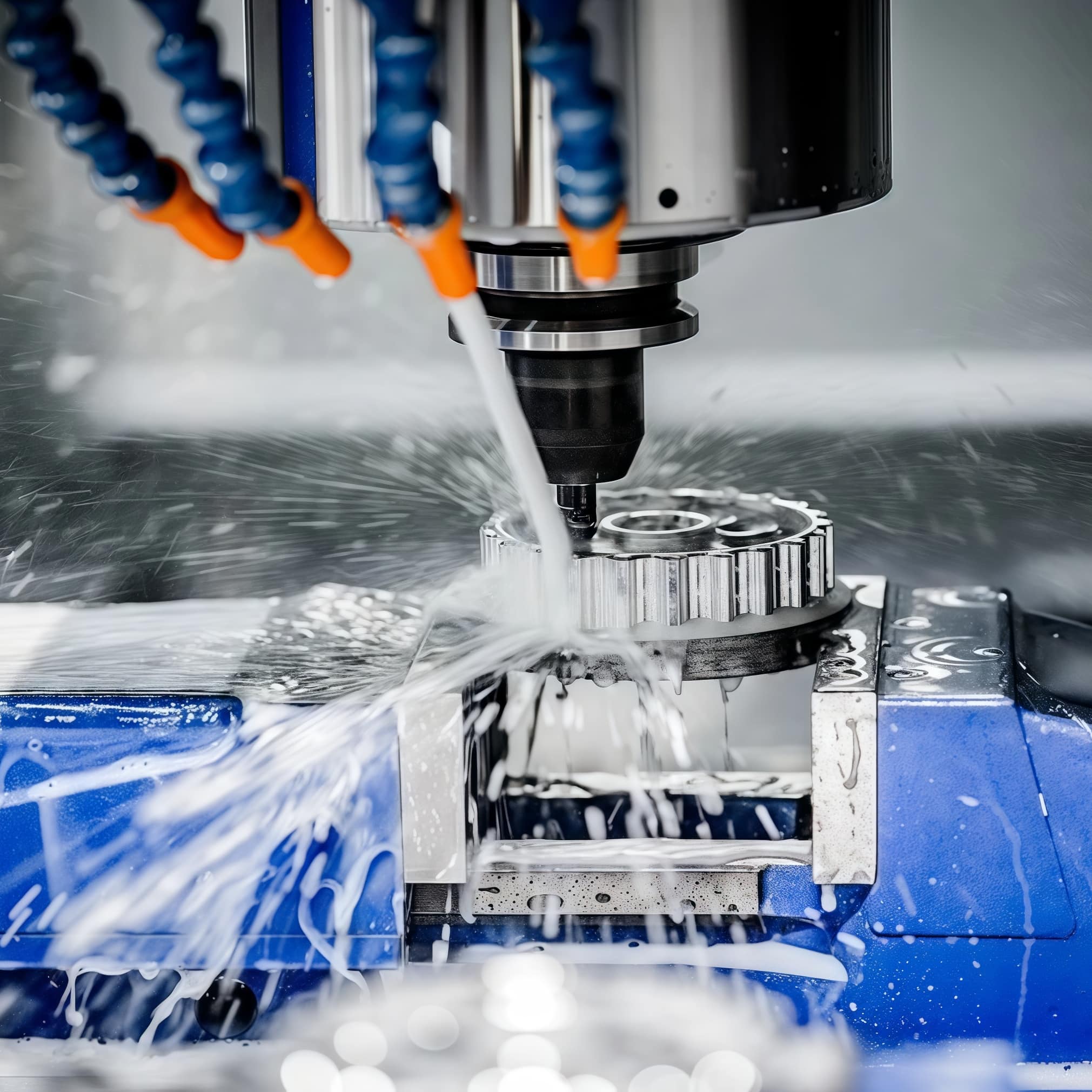
Custom parts manufacturing for robotics requires precision machining techniques that reliably hold tight tolerances across production runs. CNC machining, multi-axis operations, and advanced finishing processes ensure that each component meets specifications consistently. This level of precision within custom parts manufacturing is essential for robotic joints, drive mechanisms, and mounting structures where accumulated tolerances can degrade system performance.
Quality assurance in custom parts manufacturing includes coordinate measuring machines (CMM), automated inspection systems, and statistical process control. These verification methods confirm that every component produced meets design requirements, maintaining the repeatability and reliability that robotics assemblies demand. Custom parts manufacturing providers specializing in robotics applications understand these quality expectations and implement inspection protocols accordingly.
Material Selection and Performance Optimization
Material choice significantly impacts robotics assembly performance, and custom parts manufacturing provides access to a broad spectrum of engineered materials. Aluminum alloys offer lightweight properties for mobile robots and arm actuators, while stainless steel and titanium provide strength and corrosion resistance for industrial applications. Custom parts manufacturing teams collaborate with engineers to evaluate material tradeoffs, balancing mechanical properties, weight, cost, and manufacturing feasibility.
Advanced custom parts manufacturing processes include heat treatment, surface coating, and finishing options that enhance material performance. Anodizing improves corrosion resistance and wear characteristics, while specialized coatings support electromagnetic or thermal functionality. These process capabilities make custom parts manufacturing a comprehensive solution for robotics applications beyond basic machining.
Production Scaling and Supply Chain Efficiency
From Prototyping to Full-Scale Production
Successful robotics products often begin with limited production runs, then scale rapidly as market demand grows. Custom parts manufacturing providers handle this transition smoothly, maintaining consistency across prototype, pilot, and production volumes. Factory-direct custom parts manufacturing relationships ensure that quality, specifications, and lead times remain stable regardless of volume fluctuations, providing supply chain reliability that supports business growth.
Scaling through custom parts manufacturing allows robotics companies to manage inventory effectively by synchronizing component production with assembly schedules. Just-in-time delivery models enabled by responsive custom parts manufacturing partners reduce warehousing costs and minimize obsolescence risk, particularly important when robotics designs evolve frequently or product lifecycles are relatively short.
Cost Efficiency in Custom Manufacturing
Factory-direct custom parts manufacturing eliminates markup layers, allowing companies to achieve better unit economics than through traditional distribution channels. For robotics manufacturers, this cost efficiency translates to competitive pricing while maintaining manufacturing margins. Custom parts manufacturing providers optimize production planning and tooling investments, spreading fixed costs across multiple projects to deliver value without sacrificing quality or lead time.
Custom parts manufacturing becomes increasingly cost-effective as production volumes increase, but even prototype and low-volume runs benefit from efficient scheduling and resource allocation. By consolidating multiple component orders and leveraging shared production capacity, custom parts manufacturing operations reduce per-unit costs while maintaining the precision and quality standards that robotics assemblies require.
FAQ
How does custom parts manufacturing improve robotics assembly timelines?
Custom parts manufacturing accelerates assembly timelines by enabling rapid prototyping, parallel design verification, and direct collaboration between engineers and production teams. Because custom parts manufacturing providers can adjust production runs and delivery schedules flexibly, robotics companies avoid delays associated with standard component ordering and inventory management. Design iterations that might require weeks in traditional supply chains take days with factory-direct custom parts manufacturing, compressing overall product development cycles significantly.
What material options are available through custom parts manufacturing?
Custom parts manufacturing suppliers offer extensive material catalogs including aluminum alloys, stainless steel, titanium, and engineering polymers. Selection depends on robotics application requirements: mobile robots prioritize lightweight materials, industrial arms emphasize strength and rigidity, while precision systems often require materials with stable thermal properties. Custom parts manufacturing engineers help evaluate material tradeoffs based on performance targets, cost constraints, and manufacturing feasibility specific to each robotics project.
Can custom parts manufacturing handle high-volume production runs?
Yes, custom parts manufacturing providers equipped with advanced CNC systems and production capacity can efficiently scale from prototype quantities through high-volume production. Quality and specifications remain consistent across all volume levels within factory-direct custom parts manufacturing operations. Custom parts manufacturing scalability ensures that robotics companies can grow production with confidence, knowing that component quality and supply reliability will meet operational demands as business scales.