
 EN
EN
Manufacturing precision demands careful consideration when selecting a cnc machining service provider, particularly regarding tolerance specifications and material compatibility. Modern industrial applications require machined components that meet exact dimensional requirements while maintaining cost-effectiveness throughout production runs. The relationship between tolerance levels and material selection significantly impacts both manufacturing feasibility and final product performance in critical applications.
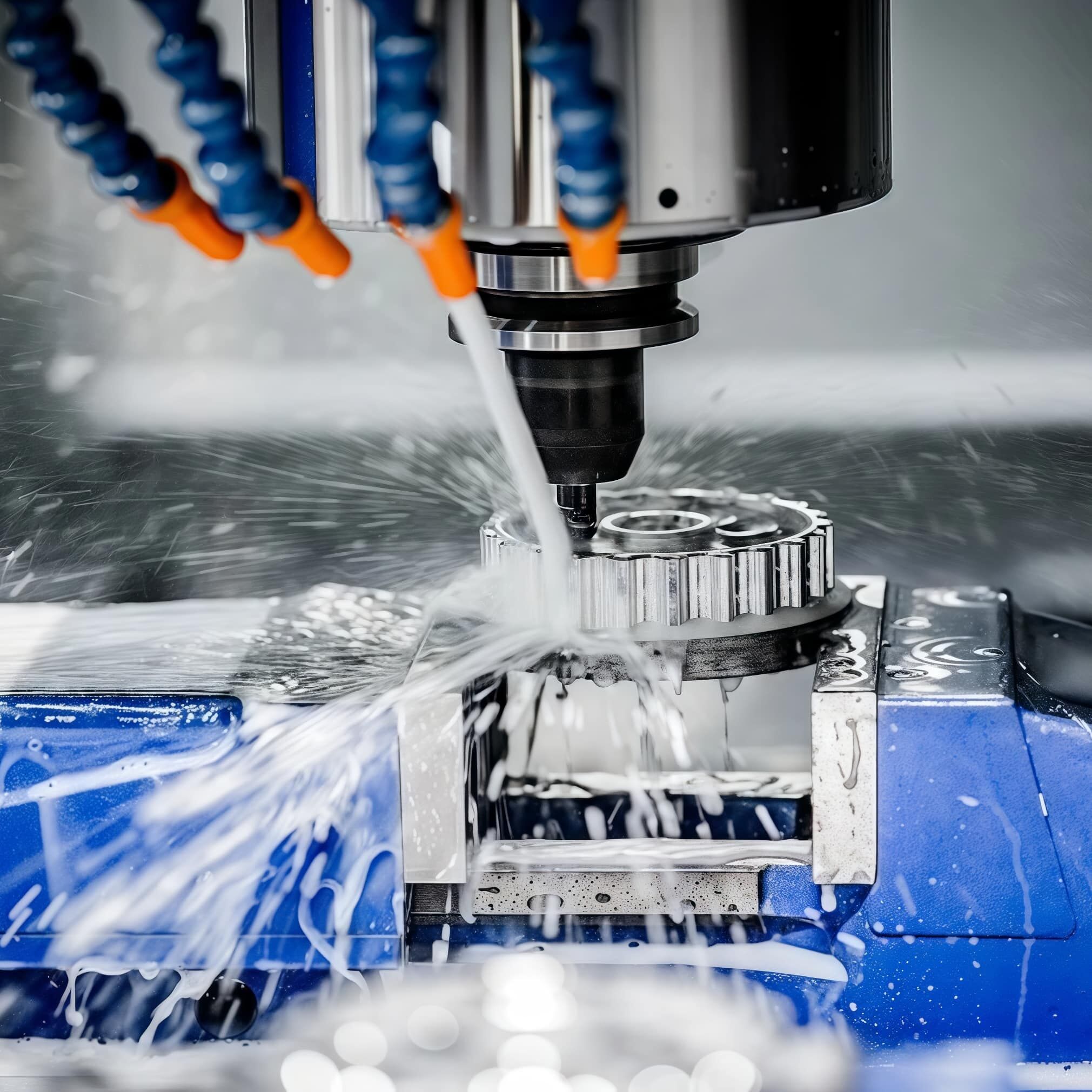
Understanding the intricate balance between achievable tolerances and material properties enables engineers to make informed decisions during the sourcing process. Different materials exhibit varying machinability characteristics, thermal expansion coefficients, and structural stability under machining forces. These factors directly influence the precision levels achievable through standard cnc machining service operations, making material selection a critical component of successful project execution.
Industry professionals must evaluate multiple variables simultaneously, including surface finish requirements, dimensional accuracy needs, and production volume considerations. The intersection of these elements determines the optimal approach for each specific application, whether involving prototype development or high-volume manufacturing scenarios.
Critical Tolerance Classifications in Precision Manufacturing
Standard Tolerance Ranges and Applications
Standard machining tolerances typically range from plus or minus 0.005 inches for general applications to plus or minus 0.0005 inches for precision components. Most cnc machining service providers maintain capabilities within the standard range without requiring specialized equipment or extended processing times. These tolerance levels accommodate the majority of industrial applications, including automotive components, consumer electronics housings, and general mechanical assemblies.
Understanding when standard tolerances suffice versus when tighter specifications become necessary helps optimize both cost and timeline considerations. Components requiring standard tolerances generally experience faster turnaround times and more competitive pricing structures from service providers. The key lies in accurately assessing functional requirements rather than specifying unnecessarily tight tolerances that increase manufacturing complexity without corresponding performance benefits.
Manufacturing engineers should evaluate the actual functional needs of each feature independently, as different areas of the same component may require varying tolerance levels. This approach allows for cost optimization while ensuring critical dimensions meet operational requirements throughout the product lifecycle.
Precision and Ultra-Precision Requirements
Precision machining operations typically achieve tolerances between plus or minus 0.0002 inches and plus or minus 0.0005 inches, suitable for aerospace components, medical devices, and optical equipment. These applications demand specialized cnc machining service capabilities, including climate-controlled environments, precision measurement equipment, and highly skilled operators with extensive experience in tight-tolerance manufacturing.
Ultra-precision machining pushes tolerance limits even further, achieving specifications as tight as plus or minus 0.0001 inches or better in specific applications. Such precision levels require advanced machine tools, specialized cutting strategies, and comprehensive quality control systems throughout the manufacturing process. The investment in equipment and expertise necessary for ultra-precision work typically results in significantly higher costs per part.
Evaluating whether precision or ultra-precision tolerances truly benefit the application helps prevent unnecessary cost escalation during sourcing decisions. Many components function adequately with standard tolerances, while others require the enhanced precision to meet performance specifications or assembly requirements.
Material Selection Impact on Machining Precision
Aluminum Alloys and Machining Characteristics
Aluminum alloys represent one of the most commonly machined materials in modern cnc machining service applications due to their excellent machinability, lightweight properties, and corrosion resistance. Different aluminum grades exhibit varying characteristics during machining operations, with 6061-T6 offering good dimensional stability and 7075-T6 providing superior strength properties at the expense of slightly reduced machinability.
The thermal conductivity of aluminum allows for efficient heat dissipation during cutting operations, enabling higher cutting speeds and feeds while maintaining dimensional accuracy. This characteristic makes aluminum particularly suitable for achieving tight tolerances without extensive tool wear or workpiece distortion. However, aluminum's relatively soft nature requires careful consideration of clamping forces and cutting tool geometry to prevent deformation during machining.
Surface finish requirements often drive aluminum grade selection, as different alloys respond differently to various cutting strategies and tool coatings. The interaction between material properties and machining parameters significantly influences the final surface quality and dimensional accuracy achievable through standard cnc machining service operations.
Steel Varieties and Precision Considerations
Steel materials encompass a broad range of compositions and heat treatment conditions, each presenting unique challenges and opportunities for precision machining applications. Carbon steels generally machine well in their annealed condition but may require specialized approaches when processed in hardened states. Stainless steels introduce additional complexity due to their work-hardening characteristics and thermal properties.
Tool steel varieties often require pre-hardening machining followed by heat treatment and finish grinding to achieve final dimensions. This multi-step process demands careful coordination between cnc machining service providers and heat treatment facilities to ensure dimensional stability throughout the manufacturing sequence. The selection of appropriate steel grades directly impacts achievable tolerances and surface finish quality.
Alloy steels present varying machinability characteristics depending on their specific composition and heat treatment condition. Understanding these material-specific considerations enables more accurate tolerance predictions and helps establish realistic expectations during the sourcing process.
Advanced Materials and Specialized Processing Requirements
Titanium and Exotic Alloy Machining
Titanium alloys require specialized cnc machining service expertise due to their unique combination of high strength, low thermal conductivity, and chemical reactivity during cutting operations. These materials typically demand slower cutting speeds, specialized tooling, and enhanced cooling strategies to achieve acceptable tool life and dimensional accuracy. The aerospace and medical industries frequently specify titanium components requiring tight tolerances and superior surface finishes.
Processing titanium successfully requires understanding its tendency toward work hardening and spring-back characteristics that can affect final dimensional accuracy. Cutting tool selection becomes critical, with carbide and ceramic tools often providing superior performance compared to traditional high-speed steel options. The interaction between cutting parameters and material response significantly influences achievable tolerance levels.
Exotic alloys such as Inconel, Hastelloy, and other superalloys present similar challenges with additional complications related to their extreme hardness and abrasive characteristics. These materials often require specialized equipment and extensive operator experience to achieve consistent results within specified tolerance ranges.
Composite and Polymer Processing Capabilities
Advanced composite materials and engineering polymers require fundamentally different approaches compared to traditional metallic materials in cnc machining service applications. Fiber-reinforced composites demand specialized cutting strategies to prevent delamination and fiber pull-out while maintaining dimensional accuracy. The anisotropic properties of composite materials create challenges in achieving consistent tolerances across different cutting directions.
Engineering polymers such as PEEK, POM, and various nylon grades each exhibit unique machining characteristics requiring tailored approaches to achieve optimal results. Temperature control becomes particularly critical when processing thermoplastic materials, as excessive heat generation can cause dimensional distortion and surface quality degradation.
Understanding the relationship between material properties and achievable tolerances helps establish realistic expectations when sourcing cnc machining service capabilities for non-metallic applications. Many service providers specialize in specific material categories, making supplier selection a critical factor in project success.
Quality Control and Measurement Considerations
Inspection Equipment and Capability Assessment
Evaluating the measurement and inspection capabilities of potential cnc machining service providers ensures they can verify achievement of specified tolerances throughout production runs. Coordinate measuring machines represent the gold standard for dimensional verification, with different accuracy classes suitable for varying tolerance requirements. The resolution and accuracy of available measurement equipment should align with the tightest tolerances specified for the project.
Surface roughness measurement capabilities become particularly important when surface finish specifications accompany tight dimensional tolerances. Profilometers and other surface analysis equipment enable verification of both texture and form characteristics that impact component functionality. The frequency and comprehensiveness of quality control procedures directly influence the reliability of delivered components.
Statistical process control implementation demonstrates a service provider's commitment to consistent quality delivery. Understanding their approach to process monitoring and control helps predict long-term capability maintenance and identifies potential quality risks before they impact production schedules.
Documentation and Traceability Requirements
Comprehensive documentation accompanies precision cnc machining service deliveries, particularly for aerospace, medical, and automotive applications requiring full traceability. Material certifications, dimensional reports, and process documentation provide evidence of compliance with specified requirements and enable effective quality management throughout the supply chain.
Digital measurement reports and certificates of conformance should clearly identify which features were measured and their relationship to drawing specifications. The clarity and completeness of quality documentation often reflect the overall maturity of the service provider's quality management system and their ability to consistently deliver within specified tolerance ranges.
Understanding documentation requirements early in the sourcing process helps establish appropriate expectations and ensures alignment between customer needs and supplier capabilities. Some applications may require additional documentation such as material test reports or process control records.
Cost Optimization Strategies for Tolerance and Material Selection
Economic Impact of Tolerance Decisions
Tolerance specifications directly impact cnc machining service costs through their influence on required equipment, processing time, and quality control procedures. Tightening tolerances from standard levels typically results in exponential cost increases as precision requirements approach machine capability limits. Understanding this relationship enables more informed decision-making during the design and sourcing phases.
The cost differential between standard and precision tolerances often ranges from two to five times the base machining cost, depending on material selection and geometric complexity. Ultra-precision requirements may increase costs by an order of magnitude or more, making careful evaluation of functional necessity essential for project viability.
Tolerance stacking analysis helps identify which features truly require tight control versus those that can function adequately with standard manufacturing tolerances. This approach enables targeted precision application while maintaining cost-effectiveness across the overall component design.
Material Selection Economics
Material costs vary significantly based on availability, machinability characteristics, and required processing complexity. Common materials like aluminum and steel typically offer the most cost-effective solutions for cnc machining service applications, while exotic alloys and specialized materials command premium pricing due to both raw material costs and processing challenges.
The relationship between material selection and achievable tolerances influences total project costs beyond simple material price differentials. Difficult-to-machine materials may require slower processing speeds, specialized tooling, and enhanced quality control procedures that multiply the economic impact of material selection decisions.
Evaluating alternative materials with similar performance characteristics but superior machinability can yield significant cost savings without compromising functional requirements. This approach requires close collaboration between design teams and cnc machining service providers to identify optimal solutions.
FAQ
What tolerance levels can typical cnc machining service providers achieve consistently?
Most professional cnc machining service providers can reliably achieve tolerances of plus or minus 0.005 inches for standard applications and plus or minus 0.002 inches for precision work. Tighter tolerances require specialized equipment and expertise, with some providers capable of plus or minus 0.0005 inches or better for critical applications. The achievable tolerance depends heavily on material selection, part geometry, and the specific machining processes employed.
How does material selection impact the cost of precision machining services?
Material selection significantly influences cnc machining service costs through multiple factors including raw material price, machinability characteristics, and required processing speeds. Easy-to-machine materials like aluminum typically cost 20-30% less to process than difficult materials like titanium or Inconel. Additionally, materials requiring specialized tooling or slower cutting speeds can increase processing time by 200-500%, substantially impacting total project costs.
Which materials offer the best combination of machinability and precision capability?
Aluminum alloys, particularly 6061-T6 and 7075-T6, provide excellent machinability while enabling tight tolerance achievement in most cnc machining service applications. Free-cutting steels like 12L14 and 1144 also offer superior machinability characteristics. For applications requiring higher strength, pre-hardened tool steels like P20 provide good machinability while maintaining dimensional stability throughout processing.
What quality control measures should I expect from precision machining service providers?
Professional cnc machining service providers should offer comprehensive inspection capabilities including coordinate measuring machines for dimensional verification, surface roughness measurement equipment, and documented quality procedures. Expect detailed inspection reports showing actual measurements versus specifications, material certifications, and process documentation for traceability. Statistical process control implementation demonstrates commitment to consistent quality delivery across production runs.
Table of Contents
- Critical Tolerance Classifications in Precision Manufacturing
- Material Selection Impact on Machining Precision
- Advanced Materials and Specialized Processing Requirements
- Quality Control and Measurement Considerations
- Cost Optimization Strategies for Tolerance and Material Selection
-
FAQ
- What tolerance levels can typical cnc machining service providers achieve consistently?
- How does material selection impact the cost of precision machining services?
- Which materials offer the best combination of machinability and precision capability?
- What quality control measures should I expect from precision machining service providers?