
 EN
EN
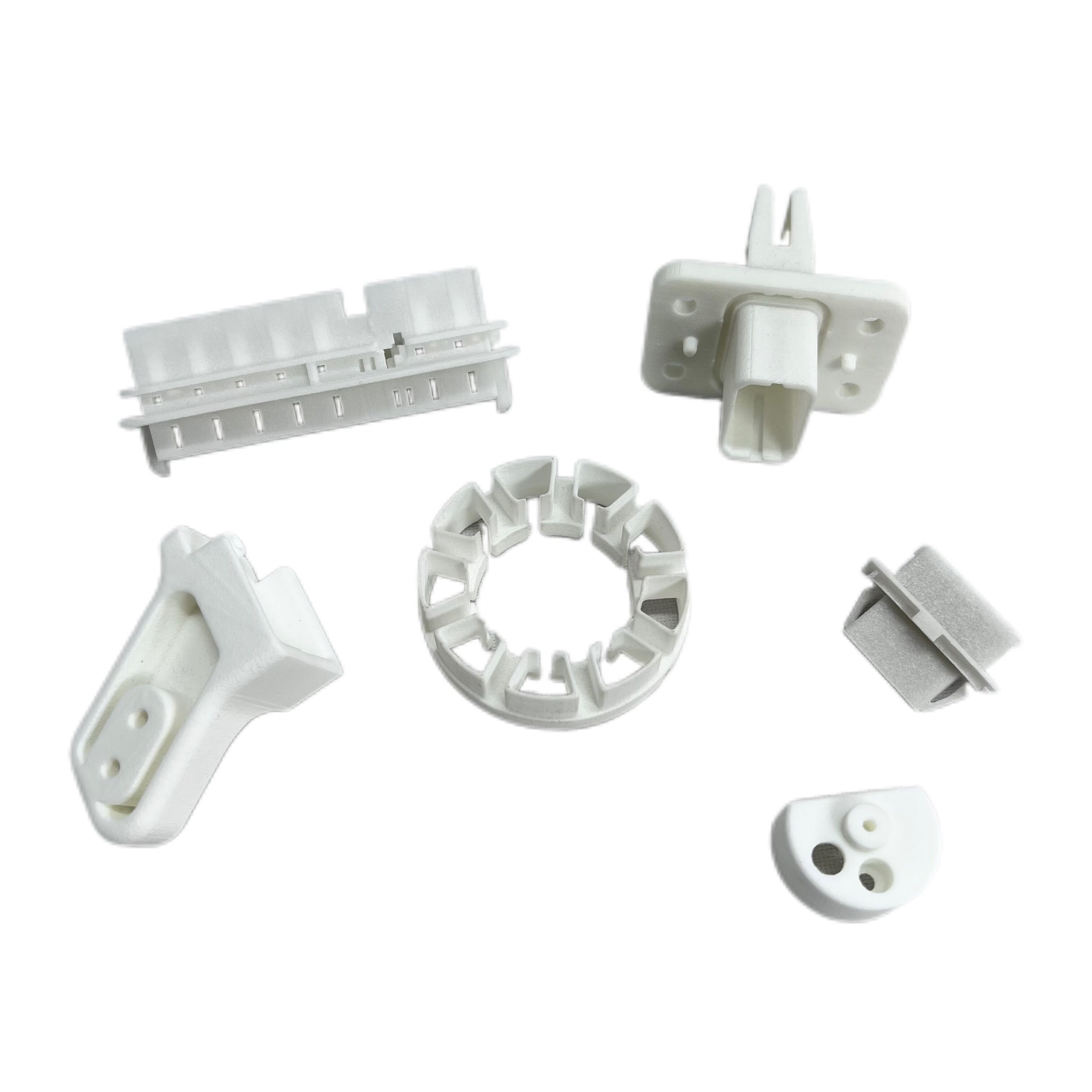
Hardware startups face unprecedented challenges in bringing innovative products to market, especially when considering manufacturing strategies that balance cost, speed, and quality. Low volume production has emerged as a critical approach for emerging companies seeking to validate their concepts while maintaining financial sustainability. This manufacturing methodology enables startups to test market demand, refine product designs, and establish customer relationships without the massive capital investments traditionally associated with large-scale manufacturing.

The landscape of hardware development has evolved significantly, with low volume production becoming increasingly accessible through advanced manufacturing technologies and specialized service providers. Modern startups can leverage these capabilities to create sophisticated prototypes and initial product runs that were previously only available to established corporations. This shift has democratized hardware innovation, allowing smaller teams with limited resources to compete effectively in global markets.
Understanding the strategic implications of low volume production requires examining its impact on various aspects of startup operations, from product development cycles to customer acquisition strategies. The flexibility inherent in small-batch manufacturing enables rapid iteration and continuous improvement, essential elements for startups operating in dynamic market conditions.
Financial Benefits and Capital Efficiency
Reduced Initial Investment Requirements
Low volume production significantly reduces the upfront capital requirements that often serve as barriers to entry for hardware startups. Traditional manufacturing approaches typically demand substantial investments in tooling, equipment, and inventory, creating financial burdens that many emerging companies cannot sustain. By adopting small-batch production strategies, startups can minimize these initial costs while maintaining the ability to bring products to market.
The financial flexibility offered by low volume production extends beyond initial tooling costs to encompass inventory management and working capital optimization. Startups can produce smaller quantities aligned with actual demand patterns, reducing the risk of overproduction and associated carrying costs. This approach enables more efficient cash flow management, allowing companies to reinvest capital in product development and market expansion rather than maintaining excessive inventory levels.
Manufacturing partners specializing in small-batch production often provide flexible payment terms and scalable pricing structures that accommodate the financial constraints of startup operations. These arrangements typically include lower minimum order quantities and reduced setup fees, making it economically viable for startups to test multiple product variants or enter niche markets that might not justify large-scale production investments.
Risk Mitigation and Market Testing
The inherent uncertainty in startup ventures makes risk management a critical consideration in manufacturing strategy selection. Low volume production enables companies to test market hypotheses with limited financial exposure, providing valuable insights into customer preferences and demand patterns before committing to large-scale manufacturing investments. This approach transforms manufacturing from a fixed cost structure to a variable one that can adapt to market feedback.
Market validation through small-batch production allows startups to gather real-world performance data and customer feedback that would be impossible to obtain through prototyping alone. This information proves invaluable for refining product specifications, identifying potential quality issues, and optimizing manufacturing processes before scaling production volumes. The iterative nature of low volume production supports continuous improvement cycles that enhance product quality and customer satisfaction.
Financial risk distribution across smaller production runs enables startups to maintain operational flexibility while exploring multiple market opportunities simultaneously. Companies can allocate resources across different product lines or market segments without concentrating excessive risk in any single manufacturing commitment. This diversification strategy proves particularly valuable for hardware startups operating in rapidly evolving technology markets.
Speed to Market and Competitive Advantage
Accelerated Product Development Cycles
The competitive landscape for hardware startups demands rapid product development cycles that can respond quickly to market opportunities and technological advances. Low volume production facilitates accelerated time-to-market by eliminating many of the lengthy processes associated with traditional manufacturing setup. Startups can transition from design validation to market-ready products in significantly shorter timeframes.
Advanced manufacturing techniques available through low volume production providers enable rapid prototyping and short-run manufacturing using the same processes and materials intended for final products. This consistency reduces the uncertainty often associated with transitioning from prototype to production, allowing startups to identify and resolve manufacturing challenges early in the development process. The result is more predictable product launches with reduced technical risk.
The ability to produce small quantities quickly enables startups to capitalize on time-sensitive market opportunities that might otherwise be missed due to lengthy manufacturing lead times. Companies can respond to emerging trends, competitive threats, or customer requests with agility that larger organizations often cannot match. This responsiveness becomes a significant competitive advantage in dynamic markets where timing often determines success.
Iterative Design Optimization
Low volume production supports iterative design methodologies that enable continuous product improvement based on real-world performance data and customer feedback. Unlike traditional manufacturing approaches that lock in design specifications early in the process, small-batch production allows for ongoing refinements and optimizations throughout the product lifecycle. This flexibility proves essential for startups seeking to differentiate their offerings in competitive markets.
The economic feasibility of producing multiple design iterations through low volume production enables startups to explore creative solutions and innovative approaches that might be cost-prohibitive in large-scale manufacturing scenarios. Companies can test different materials, manufacturing processes, or design variants to optimize performance characteristics or cost structures. This experimentation capability often leads to breakthrough innovations that provide sustainable competitive advantages.
Rapid iteration cycles supported by low volume production enable startups to incorporate customer feedback and market insights into product development processes more effectively. Companies can release initial versions to select customer groups, gather feedback, implement improvements, and launch updated versions within compressed timeframes. This customer-centric approach to product development increases the likelihood of market success and customer satisfaction.
Quality Control and Manufacturing Excellence
Enhanced Quality Assurance Processes
Low volume production environments often provide superior quality control capabilities compared to high-volume manufacturing operations. Smaller batch sizes enable more intensive inspection processes and detailed quality assurance procedures that ensure each product meets stringent specifications. This enhanced quality control becomes particularly important for hardware startups seeking to establish strong reputations in competitive markets.
The relationship between startups and low volume production providers typically involves closer collaboration and more personalized attention than what is available in large-scale manufacturing relationships. This partnership approach enables real-time quality feedback and rapid resolution of manufacturing issues that might otherwise impact product quality or delivery schedules. The result is often superior product consistency and reliability.
Manufacturing partners specializing in low volume production often maintain advanced quality control equipment and expertise that startups could not economically justify for in-house operations. Access to sophisticated testing capabilities, measurement systems, and quality assurance protocols enables startups to achieve manufacturing standards comparable to much larger organizations while maintaining cost-effective production approaches.
Process Refinement and Optimization
The iterative nature of low volume production provides opportunities for continuous process improvement that benefits both startups and their manufacturing partners. Each production run generates valuable data about process efficiency, quality outcomes, and potential optimization opportunities. This information enables systematic refinements that improve quality, reduce costs, and enhance production reliability over time.
Low volume production environments facilitate experimentation with different manufacturing techniques, materials, or process parameters to identify optimal production approaches. Startups can work with manufacturing partners to test alternative methods and evaluate their impact on product quality, cost, and production efficiency. This collaborative approach often leads to innovative manufacturing solutions that provide competitive advantages.
The flexibility inherent in low volume production enables rapid implementation of process improvements without the extensive requalification and validation procedures required in high-volume manufacturing environments. Companies can optimize manufacturing approaches based on accumulated experience and implement changes that enhance product quality or reduce costs with minimal disruption to ongoing operations.
Market Responsiveness and Customer Relationships
Customization and Product Variants
Low volume production enables hardware startups to offer product customization options and variants that would be economically impractical in large-scale manufacturing scenarios. This capability allows companies to serve niche markets, accommodate specific customer requirements, and differentiate their offerings from standardized products offered by larger competitors. The ability to provide customized solutions often commands premium pricing and enhanced customer loyalty.
The economic feasibility of producing multiple product variants through low volume production enables startups to explore different market segments and customer applications simultaneously. Companies can develop specialized versions for different industries, geographical regions, or use cases without committing to large inventory investments. This market segmentation strategy often reveals unexpected opportunities and revenue streams.
Customer co-development opportunities emerge naturally from low volume production capabilities, enabling startups to work closely with key customers to develop customized solutions that address specific requirements. These partnerships often result in long-term customer relationships, valuable market insights, and competitive advantages that would be difficult to achieve through standardized product approaches.
Direct Customer Engagement
The scale and flexibility of low volume production enable startups to maintain closer relationships with customers throughout the product lifecycle. Companies can gather detailed feedback, monitor product performance, and respond to customer needs with agility that larger organizations often cannot match. This direct engagement creates valuable competitive advantages and customer loyalty.
Small-batch production enables startups to serve as beta testing partners with key customers, providing early access to innovative products in exchange for detailed feedback and validation data. These relationships often evolve into strategic partnerships that support long-term growth and market expansion. The insights gained through direct customer engagement inform product development decisions and market strategies.
The ability to respond quickly to customer requests and market changes through low volume production demonstrates organizational agility and customer focus that differentiates startups from larger competitors. This responsiveness often becomes a key value proposition that attracts customers seeking innovative solutions and personalized service.
Technology Access and Manufacturing Innovation
Advanced Manufacturing Capabilities
Low volume production providers often invest in advanced manufacturing technologies that enable sophisticated production capabilities without requiring startups to make substantial capital investments. Access to technologies such as additive manufacturing, precision machining, and advanced materials processing enables startups to create products with complexity and quality levels that were previously accessible only to large corporations.
The rapid evolution of manufacturing technologies continues to expand the capabilities available through low volume production services. Startups can leverage cutting-edge processes and materials without the learning curve and capital requirements associated with developing in-house manufacturing capabilities. This technology access enables innovation and product differentiation that supports competitive positioning.
Manufacturing partnerships provide startups with access to specialized expertise and technical knowledge that complement their core competencies. These relationships enable companies to focus on product design and market development while leveraging manufacturing expertise to optimize production processes and quality outcomes. The result is often superior products delivered more efficiently than would be possible through purely internal development efforts.
Scalability and Growth Planning
Low volume production provides a foundation for systematic scaling as startup operations mature and market demand increases. Companies can gradually expand production volumes while maintaining relationships with trusted manufacturing partners who understand their products and quality requirements. This evolutionary approach reduces the risks associated with major manufacturing transitions.
The experience gained through low volume production operations provides valuable insights into manufacturing requirements, quality standards, and cost structures that inform future scaling decisions. Startups develop realistic understanding of production capabilities and limitations that enables more effective planning for growth phases. This knowledge proves essential when evaluating options for expanded manufacturing capacity.
Established relationships with low volume production providers often facilitate access to expanded manufacturing capabilities as startup needs evolve. Many specialized manufacturers offer scalable services that can accommodate growth from initial prototype quantities through medium-volume production runs. This continuity provides operational stability during critical growth phases.
FAQ
What minimum quantities typically qualify for low volume production services
Most low volume production providers accommodate orders ranging from single units to several thousand pieces, depending on the manufacturing process and product complexity. The specific minimum quantities vary by provider and manufacturing method, but many services cater to startups with requirements as low as 10-50 units for initial production runs. This flexibility makes low volume production accessible to companies in very early development stages.
How does the cost per unit compare between low volume production and traditional manufacturing
While the per-unit cost for low volume production is typically higher than large-scale manufacturing, the total investment required is significantly lower due to reduced minimum order quantities and setup costs. For startups with limited capital and uncertain demand patterns, the higher per-unit cost is often offset by reduced financial risk and improved cash flow management. The cost differential decreases as production volumes increase and processes optimize over time.
What manufacturing processes are available through low volume production services
Low volume production providers typically offer a comprehensive range of manufacturing processes including injection molding, CNC machining, 3D printing, vacuum casting, sheet metal fabrication, and electronic assembly. Many providers specialize in specific technologies or materials, enabling startups to access advanced manufacturing capabilities that would be cost-prohibitive to develop in-house. The availability of multiple processes within single providers facilitates integrated product development approaches.
How can startups transition from low volume production to higher volume manufacturing
The transition from low volume production to higher volume manufacturing typically involves working with established manufacturing partners to optimize processes for larger quantities, evaluate cost reduction opportunities, and potentially transition to different manufacturing methods or providers. Many low volume production providers offer scaling services or can facilitate introductions to high-volume manufacturing partners. The key is maintaining design and quality standards while achieving cost targets appropriate for larger production runs.
Table of Contents
- Financial Benefits and Capital Efficiency
- Speed to Market and Competitive Advantage
- Quality Control and Manufacturing Excellence
- Market Responsiveness and Customer Relationships
- Technology Access and Manufacturing Innovation
-
FAQ
- What minimum quantities typically qualify for low volume production services
- How does the cost per unit compare between low volume production and traditional manufacturing
- What manufacturing processes are available through low volume production services
- How can startups transition from low volume production to higher volume manufacturing