
 EN
EN
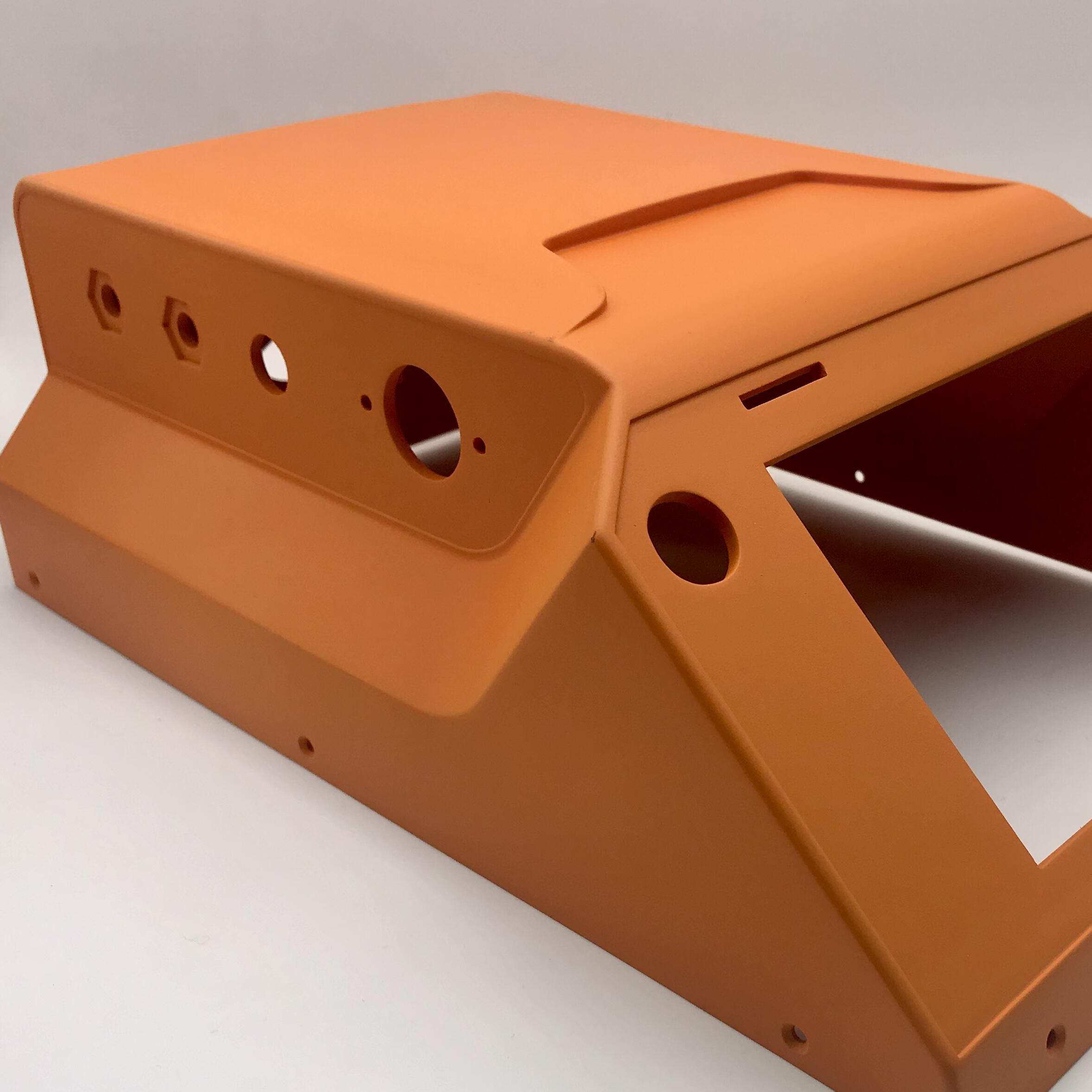
In today's hyper-competitive technology landscape, startups face unprecedented pressure to innovate quickly while minimizing risk and maximizing resource efficiency. The ability to transform ideas into tangible prototypes has become a defining factor between successful ventures and those that struggle to gain market traction. A rapid prototyping service provides tech startups with the essential capability to validate concepts, test functionality, and iterate designs at speeds that traditional manufacturing simply cannot match. This acceleration in the development cycle allows emerging companies to respond swiftly to market demands, investor expectations, and user feedback while maintaining lean operational structures.

The Startup Imperative for Speed and Agility
Market Window Compression in Technology Sectors
The window of opportunity for tech startups has dramatically narrowed over the past decade, creating an environment where speed to market often determines success or failure. Companies that can leverage a rapid prototyping service gain significant competitive advantages by reducing development timelines from months to weeks or even days. This compression allows startups to capture market share before larger competitors mobilize their resources or before consumer preferences shift toward alternative solutions. The ability to iterate quickly means that startups can refine their products based on real-world feedback rather than theoretical assumptions.
Modern consumers and business clients expect continuous innovation and improvement, making the traditional waterfall development approach increasingly obsolete. Startups utilizing rapid prototyping services can embrace agile methodologies that prioritize functional demonstrations over lengthy specification documents. This approach resonates particularly well with investors who prefer to see tangible progress rather than conceptual presentations. The visual and tactile nature of prototypes provides stakeholders with immediate understanding of product potential and market viability.
Resource Optimization Through Prototyping
Tech startups typically operate under severe capital constraints, making every investment decision critical to long-term survival and growth. A rapid prototyping service enables these companies to validate assumptions and identify potential design flaws before committing substantial resources to full-scale production. This validation process can prevent costly mistakes that might otherwise consume entire funding rounds or derail product launches. Early-stage prototyping reveals manufacturing challenges, user interface issues, and technical limitations that are far more expensive to address during later development phases.
The iterative nature of rapid prototyping allows startups to test multiple design variations simultaneously, comparing performance metrics, user preferences, and production costs across different approaches. This parallel testing methodology accelerates decision-making processes and reduces the risk of pursuing suboptimal design directions. Startups can allocate their limited engineering resources more effectively by focusing on the most promising concepts identified through prototype testing rather than spreading efforts across untested alternatives.
Technology Integration and Innovation Acceleration
Hardware-Software Convergence Requirements
Contemporary tech startups increasingly develop products that integrate sophisticated hardware components with advanced software systems, creating complex interdependencies that require careful coordination during development. A rapid prototyping service facilitates this integration by enabling teams to test hardware-software interactions in real-world conditions rather than relying solely on simulations or theoretical models. Physical prototypes reveal timing issues, thermal considerations, and user interaction patterns that digital models cannot accurately predict.
The Internet of Things ecosystem has made hardware-software integration even more critical, as products must seamlessly connect with cloud services, mobile applications, and other networked devices. Rapid prototyping allows startups to test these connections under various network conditions, identify potential security vulnerabilities, and optimize performance across different usage scenarios. This comprehensive testing approach ensures that final products meet the reliability and performance standards expected by enterprise customers and consumer markets.
Emerging Technology Adoption
Startups often serve as early adopters and pioneers of emerging technologies such as artificial intelligence, augmented reality, blockchain, and advanced materials. These technologies frequently require custom hardware implementations or novel integration approaches that benefit significantly from rapid prototyping service capabilities. Physical prototypes allow development teams to experiment with cutting-edge components, test unconventional design approaches, and push the boundaries of what established manufacturers consider feasible or marketable.
The experimental nature of startup innovation requires flexibility and adaptability that traditional manufacturing partnerships cannot provide. Rapid prototyping services offer the agility to modify designs quickly based on new technological developments, changing component availability, or evolving market requirements. This flexibility enables startups to maintain competitive advantages by incorporating the latest innovations into their products without lengthy procurement and manufacturing delays.
Investor Relations and Funding Dynamics
Demonstrable Progress for Stakeholders
Venture capitalists and angel investors increasingly expect startups to demonstrate tangible progress beyond business plans and financial projections. Physical prototypes created through rapid prototyping services provide compelling evidence of execution capability, technical competence, and market readiness that significantly enhances funding prospects. Investors can evaluate product quality, assess manufacturing feasibility, and understand user experience in ways that presentations and demos cannot convey effectively.
The ability to show functional prototypes during investor meetings creates memorable experiences that differentiate startups from purely conceptual competitors. Investors remember products they can touch, manipulate, and evaluate personally, leading to stronger emotional connections and increased confidence in management teams. This tactile engagement often translates into more favorable funding terms, larger investment amounts, and ongoing investor support throughout the development process.
Milestone-Based Development Tracking
Modern startup funding increasingly follows milestone-based structures where continued investment depends on achieving specific development targets within predetermined timeframes. A rapid prototyping service enables startups to meet these milestones more reliably by providing concrete deliverables that demonstrate progress toward commercial readiness. Prototype iterations serve as natural milestone markers that investors can evaluate objectively rather than relying on subjective progress reports or technical documentation.
This milestone approach aligns investor expectations with realistic development timelines while providing startups with clear targets for each funding tranche. The visual nature of prototypes makes progress assessment straightforward for investors who may lack deep technical expertise in specific domains. Regular prototype reviews create structured communication channels between startups and investors, fostering collaborative relationships that extend beyond purely financial arrangements.
Market Validation and User Experience Optimization
Early User Feedback Integration
User-centered design has become fundamental to tech product success, requiring startups to gather and incorporate feedback from potential customers throughout the development process. Rapid prototyping services enable this iterative feedback loop by producing testable versions of products that users can evaluate in realistic usage scenarios. This early feedback identifies usability issues, feature gaps, and design preferences that might not emerge until after product launch when modifications become exponentially more expensive.
The quality and relevance of user feedback depend heavily on the fidelity and functionality of the prototypes being tested. High-quality rapid prototyping services can produce prototypes that closely approximate final product experiences, generating more accurate and actionable feedback from test users. This improved feedback quality enables startups to make informed design decisions based on real user behavior rather than assumptions or theoretical user models.
Market Positioning and Differentiation
Competitive differentiation becomes increasingly challenging as technology markets mature and feature sets converge across competing products. A rapid prototyping service allows startups to explore unique design approaches, innovative form factors, and novel user interaction methods that can create meaningful differentiation in crowded markets. Physical prototypes enable design teams to experiment with materials, textures, ergonomics, and aesthetic elements that contribute to overall product appeal and market positioning.
The ability to quickly test different positioning strategies through prototype variations allows startups to identify market niches and user segments that may be underserved by existing solutions. This market exploration capability is particularly valuable for startups targeting enterprise customers who often have specific requirements that mass-market products cannot address effectively. Customized prototypes can demonstrate how products might be adapted for specific use cases or industry verticals.
Risk Mitigation and Quality Assurance
Technical Feasibility Validation
Many startup failures result from technical challenges that emerge during later development phases when design changes become prohibitively expensive or time-consuming. A rapid prototyping service enables early identification of technical limitations, manufacturing constraints, and performance bottlenecks that might not be apparent during initial design phases. This early validation prevents startups from pursuing development paths that ultimately prove unfeasible or commercially unviable.
Complex products involving multiple subsystems, advanced materials, or precision manufacturing requirements particularly benefit from rapid prototyping validation. Physical testing reveals interactions between components, thermal management issues, and assembly challenges that computer simulations may not accurately predict. This comprehensive validation reduces the likelihood of major design revisions during later development phases when such changes can derail product launch schedules and exhaust development budgets.
Regulatory Compliance and Standards
Tech products increasingly face stringent regulatory requirements related to safety, electromagnetic compatibility, environmental impact, and data privacy. Rapid prototyping services enable startups to test compliance requirements early in the development process, identifying potential issues before final design freeze. This proactive approach prevents costly redesigns that might be required if compliance issues are discovered during certification testing or market launch phases.
Different markets and applications may have varying regulatory requirements, making it essential for startups to understand and plan for these differences during product development. Prototype testing allows companies to evaluate how design modifications for regulatory compliance might impact product performance, user experience, or manufacturing costs. This early assessment enables informed decisions about market priorities and product positioning strategies.
Manufacturing Transition and Scale Preparation
Production Process Development
The transition from prototype to mass production represents one of the most challenging phases in tech product development, often requiring significant design modifications to accommodate manufacturing constraints and cost targets. A rapid prototyping service helps startups prepare for this transition by testing production-oriented design approaches and identifying potential manufacturing issues before committing to tooling and production setup costs. This preparation reduces the risk of delays and cost overruns during the scaling phase.
Different manufacturing processes have unique requirements and limitations that may not be apparent during initial design phases. Rapid prototyping allows startups to experiment with various manufacturing approaches, comparing cost structures, quality levels, and production volumes across different options. This analysis enables informed decisions about manufacturing partnerships, production locations, and supply chain strategies that will impact long-term business success.
Supply Chain Integration
Modern tech products typically incorporate components from multiple suppliers, creating complex supply chain dependencies that must be managed carefully to ensure consistent product quality and availability. Rapid prototyping services enable startups to test component integration, evaluate supplier capabilities, and identify potential supply chain risks before committing to large-scale procurement contracts. This early evaluation prevents supply chain disruptions that could impact product launch schedules or ongoing production operations.
The global nature of component supply chains introduces additional complexity related to logistics, quality control, and geopolitical risks that startups must consider during product development. Prototype testing with components from different suppliers allows companies to evaluate quality variations, delivery reliability, and cost differences that influence supplier selection decisions. This comparative analysis supports the development of robust supply chain strategies that can adapt to changing market conditions and supplier availability.
FAQ
How does rapid prototyping service cost compare to traditional development approaches for startups
While rapid prototyping services require upfront investment, they typically deliver significant cost savings over traditional development approaches by identifying and resolving design issues early in the development process. The cost of prototype iterations is substantially lower than the expense of redesigning products after tooling or production setup, making rapid prototyping a cost-effective risk management strategy. Additionally, faster development cycles enabled by rapid prototyping can help startups reach revenue-generating milestones sooner, improving overall return on investment and reducing total capital requirements.
What types of prototypes are most valuable for tech startup validation
The most valuable prototypes for tech startups are functional prototypes that demonstrate core product capabilities and user interactions rather than purely aesthetic models. These prototypes should incorporate actual electronic components, software interfaces, and mechanical functions that potential users and investors can evaluate directly. The fidelity level should be sufficient to generate meaningful feedback while remaining cost-effective for multiple iterations. Startups benefit most from prototypes that can be demonstrated in realistic usage scenarios and tested by actual target users.
How quickly can startups expect to receive prototypes from rapid prototyping services
Modern rapid prototyping services can typically deliver initial prototypes within days to weeks depending on complexity, materials, and finishing requirements. Simple 3D printed prototypes may be available within 24-48 hours, while more complex prototypes involving multiple manufacturing processes or electronic integration may require 1-2 weeks. The key advantage for startups is the ability to iterate quickly, with subsequent prototype versions often available within similar timeframes. This speed enables continuous improvement cycles that keep pace with fast-moving technology markets and investor expectations.
What should startups consider when selecting a rapid prototyping service provider
Startups should evaluate rapid prototyping service providers based on technical capabilities, turnaround times, quality standards, and cost structures that align with their specific product requirements and budget constraints. Key considerations include available manufacturing processes, material options, finishing capabilities, and experience with similar product categories. Communication and project management capabilities are equally important, as startups often require close collaboration and frequent updates during the iterative development process. Providers with experience serving tech startups understand the unique challenges and requirements of early-stage companies, making them more effective partners for rapid development cycles.
Table of Contents
- The Startup Imperative for Speed and Agility
- Technology Integration and Innovation Acceleration
- Investor Relations and Funding Dynamics
- Market Validation and User Experience Optimization
- Risk Mitigation and Quality Assurance
- Manufacturing Transition and Scale Preparation
-
FAQ
- How does rapid prototyping service cost compare to traditional development approaches for startups
- What types of prototypes are most valuable for tech startup validation
- How quickly can startups expect to receive prototypes from rapid prototyping services
- What should startups consider when selecting a rapid prototyping service provider