
 EN
EN
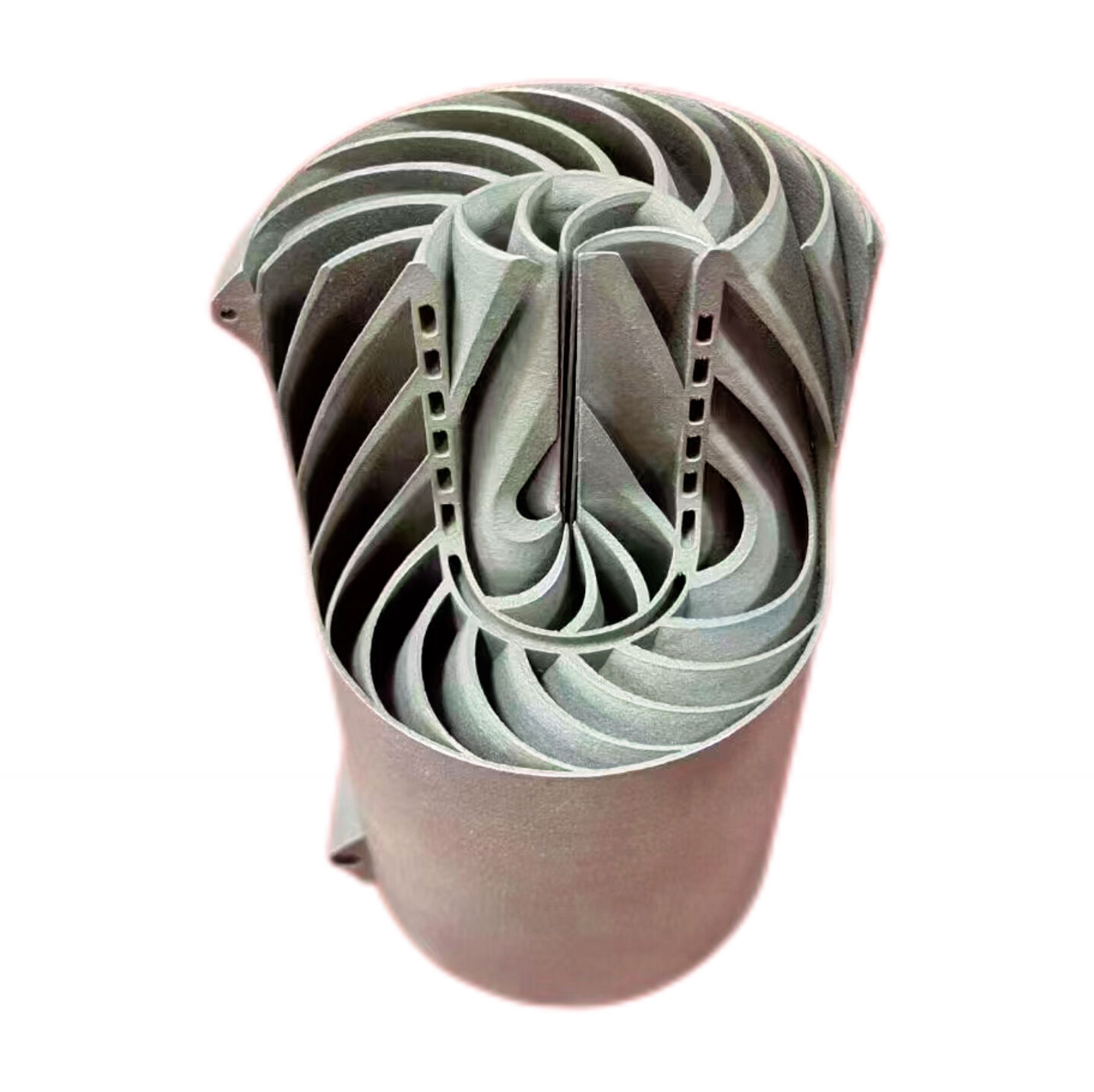
Modern manufacturing demands speed, precision, and cost-effectiveness in bringing innovative products to market. Companies across industries are increasingly turning to advanced manufacturing solutions that can transform conceptual designs into tangible prototypes within days rather than weeks or months. The traditional product development cycle often involves lengthy tooling processes, expensive molds, and multiple iterations that can significantly delay time-to-market. Revolutionary additive manufacturing technologies have emerged as game-changing solutions that address these challenges while providing unprecedented design freedom and customization capabilities.

Professional additive manufacturing services have revolutionized how businesses approach product development, offering unparalleled flexibility in creating complex geometries and functional prototypes. These advanced manufacturing capabilities enable companies to test multiple design iterations rapidly, validate concepts early in the development process, and reduce overall production costs. The ability to produce parts with intricate internal structures, overhangs, and lightweight lattice designs that would be impossible with traditional manufacturing methods makes these services invaluable for innovation-driven organizations.
The strategic advantages of utilizing professional rapid prototyping services extend beyond mere speed and convenience. Companies can significantly reduce their capital investment requirements by eliminating the need for expensive tooling and machinery while accessing cutting-edge technology and expertise. This approach allows businesses to focus their resources on core competencies while leveraging specialized manufacturing capabilities that deliver consistent, high-quality results across diverse material options and application requirements.
Accelerated Product Development Cycles
Rapid Iteration Capabilities
The fundamental advantage of professional additive manufacturing lies in its ability to dramatically compress product development timelines. Traditional manufacturing methods often require weeks or months to produce initial prototypes, particularly when complex tooling or specialized equipment is involved. A professional 3D printing service can transform digital designs into physical prototypes within 24 to 72 hours, enabling rapid design validation and immediate feedback incorporation.
This accelerated capability allows development teams to explore multiple design variations simultaneously, testing different approaches and configurations without the time and cost penalties associated with traditional prototyping methods. Engineers can quickly identify potential issues, optimize designs for performance and manufacturability, and make informed decisions based on physical testing rather than theoretical calculations alone. The iterative nature of modern product development becomes significantly more efficient when prototype turnaround times are measured in days rather than weeks.
Furthermore, the ability to produce functional prototypes with moving parts and assembly components enables comprehensive testing of complete systems rather than individual components. This holistic approach to prototype development provides valuable insights into product performance, user experience, and potential manufacturing challenges before committing to expensive production tooling or large-scale manufacturing investments.
Design Validation and Testing
Professional rapid prototyping services enable comprehensive design validation through physical testing of actual components rather than relying solely on computer simulations. While digital analysis tools provide valuable insights, nothing replaces the ability to hold, manipulate, and test physical prototypes under real-world conditions. This tangible validation process often reveals design flaws, ergonomic issues, or performance limitations that might not be apparent in digital models.
The precision and accuracy achievable with modern additive manufacturing technologies ensure that prototypes accurately represent final production parts in terms of dimensional tolerances, surface finishes, and mechanical properties. This fidelity allows engineers to conduct meaningful stress tests, fit and function evaluations, and performance assessments that provide reliable data for design optimization and production planning.
Advanced material options available through professional 3D printing service providers enable testing with materials that closely match intended production specifications. From high-temperature engineering plastics to flexible elastomers and composite materials, the range of available options allows for comprehensive material property evaluation and selection optimization based on actual performance data rather than theoretical specifications.
Cost-Effective Prototyping Solutions
Elimination of Tooling Costs
Traditional manufacturing methods typically require significant upfront investments in tooling, molds, and specialized fixtures before producing even a single prototype. These tooling costs can range from thousands to hundreds of thousands of dollars, depending on part complexity and production requirements. Professional additive manufacturing services eliminate these barriers by producing parts directly from digital files without any tooling requirements.
This direct-from-digital approach provides immediate cost savings for prototype development while also offering the flexibility to modify designs without incurring additional tooling expenses. Changes that would require expensive mold modifications or completely new tooling in traditional manufacturing can be implemented instantly through simple file updates, enabling cost-effective design optimization throughout the development process.
The economic advantages become particularly significant during the early stages of product development when multiple design iterations are common. Companies can explore numerous design alternatives and optimization strategies without the financial constraints typically associated with prototype production, leading to better final designs and more innovative solutions.
Material and Production Efficiency
Modern 3D printing service providers utilize advanced additive manufacturing technologies that offer exceptional material efficiency compared to traditional subtractive manufacturing methods. While conventional machining processes often waste significant amounts of raw material through cutting and removal operations, additive manufacturing builds parts layer by layer using only the material necessary for the final component.
This material efficiency translates directly into cost savings, particularly when working with expensive engineering materials or specialized compounds. The ability to produce complex internal geometries and lightweight structures further enhances material efficiency while potentially improving part performance through optimized designs that would be impossible to achieve with traditional manufacturing methods.
Professional service providers also optimize production efficiency through strategic build planning and part nesting, maximizing the utilization of available build volume while maintaining part quality and accuracy. This optimization approach reduces per-part costs and enables faster project completion times, providing additional value to clients seeking efficient prototyping solutions.
Design Freedom and Innovation
Complex Geometry Capabilities
One of the most compelling advantages of utilizing professional 3D printing service capabilities is the unprecedented design freedom available to engineers and designers. Traditional manufacturing constraints such as draft angles, undercuts, and accessibility for machining tools become largely irrelevant in additive manufacturing environments, opening up entirely new possibilities for innovative product designs and engineering solutions.
Complex internal channels, lattice structures, and organic geometries that would be impossible or prohibitively expensive to produce through conventional methods become routine achievements with advanced additive manufacturing technologies. This capability enables engineers to optimize designs for performance rather than manufacturing constraints, leading to lighter, stronger, and more efficient products across diverse applications.
The ability to consolidate multiple components into single, complex parts reduces assembly requirements, eliminates potential failure points, and simplifies supply chain management. This consolidation approach often results in improved product reliability, reduced manufacturing costs, and enhanced performance characteristics that provide competitive advantages in demanding market environments.
Customization and Personalization
Professional additive manufacturing services excel at producing customized and personalized products without the traditional cost penalties associated with low-volume or one-off production runs. Each part can be uniquely designed and manufactured without requiring dedicated tooling or setup changes, enabling mass customization strategies that were previously economically unfeasible.
This customization capability extends beyond simple dimensional variations to include functional modifications, integrated features, and personalized aesthetics that enhance user experience and product differentiation. Companies can offer tailored solutions that meet specific customer requirements while maintaining efficient production processes and competitive pricing structures.
The flexibility inherent in digital manufacturing processes allows for real-time design modifications based on customer feedback, market research, or changing requirements without disrupting production schedules or incurring additional costs. This responsiveness provides significant competitive advantages in dynamic market environments where customer preferences and technical requirements continue to evolve rapidly.
Material Innovation and Performance
Advanced Engineering Materials
Modern 3D printing service providers offer access to an extensive range of advanced engineering materials that rival or exceed the performance characteristics of traditionally manufactured components. High-performance thermoplastics, metal alloys, ceramics, and composite materials provide engineers with unprecedented material selection flexibility for demanding applications across aerospace, automotive, medical, and industrial sectors.
These advanced materials often incorporate specialized additives such as carbon fibers, glass fibers, or metallic particles that enhance mechanical properties, thermal performance, or electrical characteristics. The ability to access these specialized materials without significant minimum order quantities or long lead times enables rapid experimentation and optimization of material properties for specific application requirements.
Professional service providers maintain rigorous quality control processes and material certification programs that ensure consistent performance and traceability throughout the production process. This quality assurance approach provides confidence in material properties and enables reliable performance predictions based on established material databases and testing protocols.
Multi-Material Capabilities
Advanced additive manufacturing technologies available through professional service providers enable the production of multi-material components that combine different material properties within single parts. This capability allows engineers to optimize component performance by placing specific materials exactly where their unique properties are most beneficial, such as combining rigid structural elements with flexible sealing surfaces or integrating conductive traces within insulating substrates.
Multi-material production capabilities eliminate the need for complex assembly processes while providing enhanced functionality and performance characteristics that would be difficult or impossible to achieve through traditional manufacturing methods. This integration approach reduces part count, simplifies supply chains, and often improves overall product reliability by eliminating potential assembly-related failure modes.
The precision control available in professional additive manufacturing environments ensures accurate material placement and consistent interface bonding between different materials, providing reliable performance characteristics and predictable material behavior under various operating conditions and environmental factors.
Quality Assurance and Professional Standards
Precision and Accuracy Standards
Professional 3D printing service providers maintain stringent quality control standards that ensure consistent dimensional accuracy, surface quality, and mechanical properties across all produced components. Advanced calibration procedures, environmental controls, and process monitoring systems provide the reliability and repeatability required for demanding engineering applications and critical prototype development projects.
State-of-the-art measurement and inspection equipment enables comprehensive quality verification throughout the production process, from initial material preparation through final part inspection and certification. This comprehensive quality assurance approach provides clients with documented evidence of part conformance to specifications and enables reliable performance predictions based on established manufacturing capabilities.
Professional service providers also maintain detailed process documentation and traceability systems that enable continuous improvement initiatives and provide valuable feedback for design optimization and manufacturing process refinement. This systematic approach to quality management ensures consistent results and enables confident scaling from prototype quantities to production volumes when appropriate.
Industry Certifications and Compliance
Leading 3D printing service providers maintain comprehensive industry certifications and compliance standards that ensure their processes and capabilities meet the stringent requirements of regulated industries such as aerospace, medical devices, and automotive manufacturing. These certifications provide assurance that parts produced for prototype development will be compatible with eventual production requirements and regulatory standards.
Compliance with international quality standards such as ISO 9001, AS9100, or FDA regulations demonstrates professional service providers' commitment to systematic quality management and continuous improvement processes. This certification framework provides clients with confidence in service capabilities and ensures that prototype development activities align with eventual production and commercialization requirements.
Professional service providers also maintain current knowledge of evolving industry standards and emerging regulations, ensuring that prototype development activities incorporate the latest requirements and best practices. This proactive approach helps clients avoid potential compliance issues and reduces the risk of costly redesign activities during the transition from prototype to production phases.
Strategic Business Advantages
Competitive Market Positioning
Companies that leverage professional additive manufacturing services for rapid product development gain significant competitive advantages through faster time-to-market capabilities and enhanced innovation potential. The ability to quickly test and validate new concepts enables more aggressive product development strategies and responsive adaptation to changing market conditions or customer requirements.
Professional 3D printing service partnerships provide access to cutting-edge manufacturing technologies and expertise without requiring substantial capital investments or specialized personnel. This approach allows companies to focus their resources on core competencies while leveraging world-class manufacturing capabilities for prototype development and low-volume production requirements.
The flexibility and responsiveness inherent in professional additive manufacturing services enable dynamic product development strategies that can adapt quickly to market feedback, competitive pressures, or technological advances. This agility provides significant advantages in fast-moving industries where rapid innovation and responsive development capabilities determine market success.
Risk Mitigation and Investment Protection
Utilizing professional rapid prototyping services significantly reduces the financial risks associated with product development by enabling comprehensive testing and validation before committing to expensive production tooling or manufacturing investments. This risk mitigation approach allows companies to make informed decisions based on actual performance data rather than theoretical projections or market assumptions.
The ability to quickly and cost-effectively test multiple design alternatives reduces the likelihood of costly design changes during later development phases or after production has begun. This early validation approach helps ensure that final products meet performance requirements, customer expectations, and market needs while minimizing the risk of expensive redesign or recall situations.
Professional service providers also offer valuable expertise and consultation services that help clients optimize their product development strategies and avoid common pitfalls or design challenges. This collaborative approach leverages accumulated experience and technical knowledge to enhance project success rates and improve overall development efficiency and effectiveness.
FAQ
How quickly can professional additive manufacturing services produce prototypes
Most professional 3D printing service providers can produce standard prototypes within 24 to 72 hours from file submission, depending on part complexity, material requirements, and current production schedules. Rush services are often available for critical projects requiring even faster turnaround times. Complex multi-component assemblies or parts requiring specialized post-processing may require additional time, but lead times are typically measured in days rather than weeks compared to traditional manufacturing methods.
What materials are available through professional rapid prototyping services
Professional service providers offer extensive material libraries including high-performance engineering thermoplastics, metal alloys, ceramics, elastomers, and advanced composites. Common options include ABS, PLA, PETG, nylon, polycarbonate, stainless steel, aluminum, titanium, and specialized materials with enhanced properties such as flame retardancy, chemical resistance, or biocompatibility. Many providers also offer proprietary material formulations developed specifically for demanding applications in aerospace, automotive, medical, and industrial markets.
How do costs compare between professional additive manufacturing and traditional prototyping methods
Professional 3D printing service costs are typically significantly lower than traditional prototyping methods for low-volume production and complex geometries due to the elimination of tooling requirements and setup costs. While per-part costs may be higher for very simple geometries compared to high-volume traditional manufacturing, the total project costs including design iterations, tooling, and time-to-market considerations often favor additive manufacturing approaches. Cost advantages become more pronounced for complex parts, low quantities, and projects requiring multiple design iterations.
What quality standards and certifications do professional service providers maintain
Leading professional additive manufacturing service providers maintain comprehensive quality management systems including ISO 9001 certification for general quality management, AS9100 for aerospace applications, ISO 13485 for medical devices, and various industry-specific certifications. Many providers also maintain ITAR registration for defense applications and FDA compliance for medical device development. These certifications ensure consistent quality, traceability, and compliance with regulatory requirements across diverse industry applications and customer requirements.
Table of Contents
- Accelerated Product Development Cycles
- Cost-Effective Prototyping Solutions
- Design Freedom and Innovation
- Material Innovation and Performance
- Quality Assurance and Professional Standards
- Strategic Business Advantages
-
FAQ
- How quickly can professional additive manufacturing services produce prototypes
- What materials are available through professional rapid prototyping services
- How do costs compare between professional additive manufacturing and traditional prototyping methods
- What quality standards and certifications do professional service providers maintain