
 EN
EN
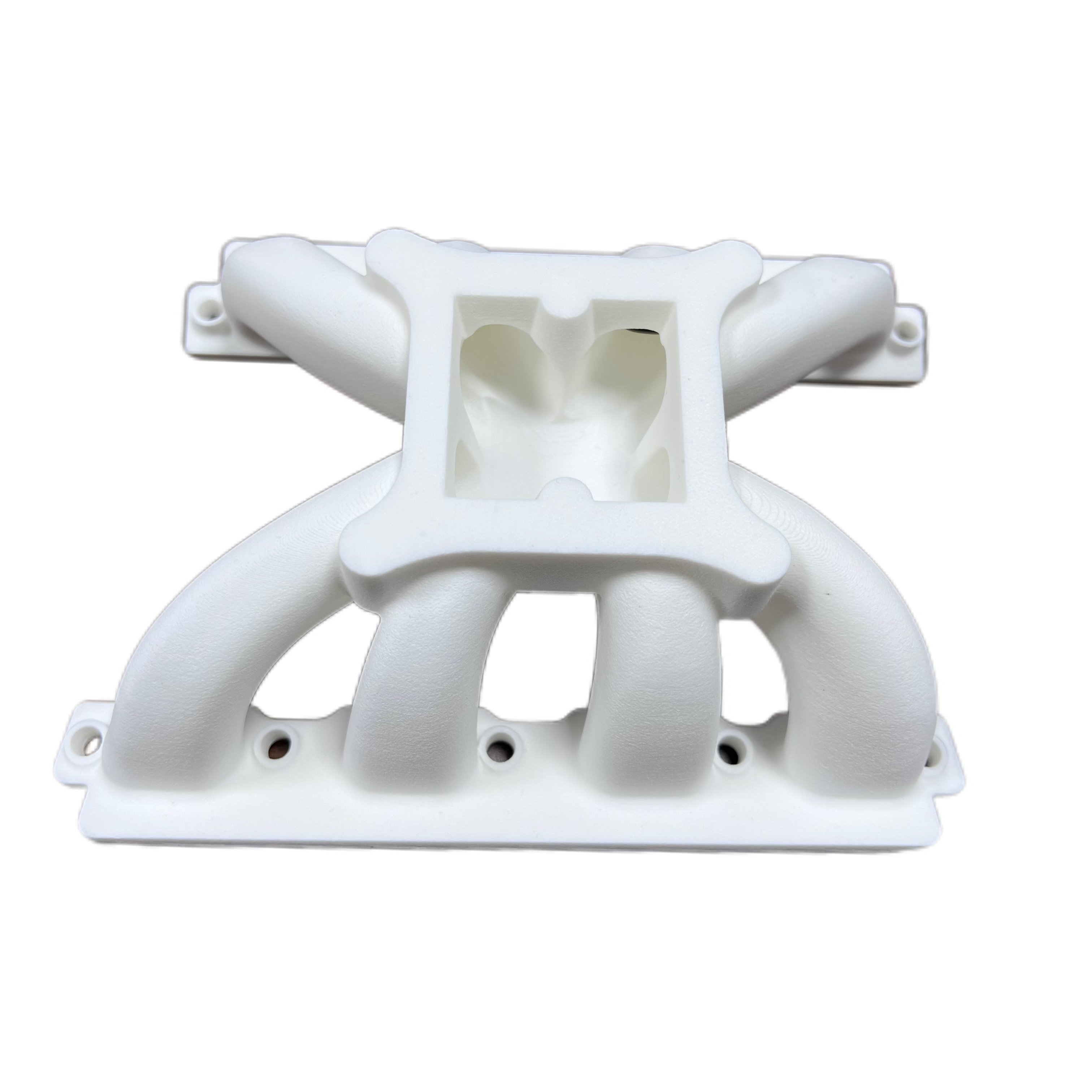
High-volume production demands precision, reliability, and consistency that standard prototyping approaches simply cannot deliver. As manufacturers scale from experimental batches to commercial-grade output, the requirements for a professional 3D printing service fundamentally shift. Advanced 3D printing service standards ensure that every component meets dimensional tolerances, material specifications, and functional performance criteria required by demanding industrial applications. Organizations that implement these standards gain competitive advantages in cost control, lead time reduction, and supply chain stability.

The transition to high-volume production using a robust 3D printing service requires careful attention to process repeatability, material validation, and quality assurance frameworks. Unlike small-batch operations where variance is acceptable, mass production demands that every part remains within specification across thousands of units. This article explores the critical standards, best practices, and operational considerations that define modern 3D printing service delivery at production scale.
Quality Control Frameworks for Production-Scale 3D Printing Service
Dimensional Accuracy and Tolerance Management
A professional 3D printing service must establish measurable tolerance standards before production begins. High-volume applications require consistent dimensional accuracy across all produced parts, with variation measured in fractions of millimeters. Quality protocols should include statistical process control methods that track dimensional performance over production runs, identifying drift before parts fall out of specification.
Tolerance management in a 3D printing service involves both machine calibration and part verification procedures. Regular calibration of printing equipment ensures that the output matches design specifications throughout extended production campaigns. Many facilities employ coordinate measuring machines and automated inspection systems to verify critical dimensions on sampling intervals, catching quality issues before they affect downstream assembly or function.
Material Certification and Consistency
Material properties form the foundation of reliable 3D printing service delivery for production environments. Raw material batches must be tested and certified before entering the production queue, documenting mechanical strength, density, and processing characteristics. A quality-focused 3D printing service maintains detailed material traceability records linking every production batch to its source material certification.
Consistency in material handling and storage directly influences the success of a 3D printing service at scale. Environmental controls such as temperature and humidity management prevent material degradation that could compromise part performance. Post-processing procedures must also remain standardized, whether involving thermal treatment, chemical finishing, or mechanical operations that affect final material properties.
Process Standardization and Repeatability in 3D Printing Service Operations
Machine Parameters and Production Protocols
A scalable 3D printing service requires documented, validated machine parameters that produce consistent results across multiple production runs. Process parameters including layer height, scan speed, laser power, and thermal management must be tested and locked into controlled settings for each material and design geometry. This standardization prevents variation that could arise from operator differences or equipment drift over time.
Documentation protocols for a 3D printing service should record all production parameters, environmental conditions, and equipment status for every manufacturing batch. This traceability enables root cause analysis if quality issues emerge and provides audit trails required by regulated industries. Process validation studies establish baseline performance metrics before full production authorization, confirming that the 3D printing service can reliably meet production requirements.
Workflow Integration and Handoff Procedures
High-volume 3D printing service operations demand clear handoff procedures between design, manufacturing, quality control, and post-processing stages. Each stage must have defined input requirements and output specifications, preventing errors that accumulate across the production workflow. Standardized inspection checkpoints within the 3D printing service workflow catch defects early when correction is most cost-effective.
Automation and digital tracking systems enhance the reliability of a 3D printing service managing thousands of parts. Barcode systems and production software enable real-time monitoring of part status, location, and quality indicators. This visibility allows production managers to respond quickly to emerging issues and maintain consistent output rates across extended production schedules.
Regulatory Compliance and Industry Standards for 3D Printing Service
Industry-Specific Quality Requirements
Different industries impose distinct compliance requirements on a 3D printing service provider operating at scale. Aerospace applications demand adherence to AS9100 quality standards and strict material certification protocols. Medical device production requires 3D printing service compliance with ISO 13485 standards and FDA quality system regulations. Automotive applications increasingly reference ISO/ASTM standards for additive manufacturing materials and processes.
A compliant 3D printing service maintains documentation proving that materials, processes, and finished parts meet industry-specific standards. Regular audits and certifications demonstrate that the 3D printing service maintains these quality levels consistently. Understanding your industry's specific requirements ensures that partnering with a 3D printing service provider delivers components suitable for your application without costly rework or regulatory challenges.
Testing and Validation Protocols
Production-grade 3D printing service providers implement comprehensive testing to validate that materials and manufacturing processes meet published specifications. Mechanical testing including tensile strength, elongation, and fatigue performance establishes baseline performance for each material batch used in the 3D printing service. Environmental testing such as thermal cycling or humidity exposure confirms that parts maintain functionality under real-world conditions.
A mature 3D printing service maintains test data libraries that enable rapid qualification of new applications. When a customer requests parts through the 3D printing service for a novel application, providers reference similar existing validations to accelerate qualification timelines. This approach balances thorough quality assurance with practical time-to-market requirements for production deployment.
FAQ
What distinguishes production-grade 3D printing service from prototype services?
Production-grade 3D printing service implements rigorous process controls, material certification, dimensional verification, and compliance documentation that prototype services often omit. The 3D printing service at production scale must deliver thousands of identical parts meeting identical specifications, while prototype services prioritize design exploration and functional validation. Investment in quality infrastructure and process validation distinguishes a capable production 3D printing service from prototype-focused operations.
How does a 3D printing service ensure consistency across large production runs?
A reliable 3D printing service maintains consistency through standardized machine parameters, validated material batches, statistical process monitoring, and regular calibration. The 3D printing service implements sampling inspection protocols that track dimensional and material properties throughout production. Process control charts and statistical methods enable the 3D printing service to detect and correct drift before parts fall outside specifications.
Which industries benefit most from production-grade 3D printing service capabilities?
Aerospace, medical device, automotive, and industrial equipment manufacturers derive significant value from production-grade 3D printing service providers. These industries demand high precision, strict compliance, and reliable supply of custom components where a capable 3D printing service eliminates traditional manufacturing constraints. Each industry maintains specific quality standards that a credible 3D printing service provider helps navigate and comply with effectively.