
 EN
EN
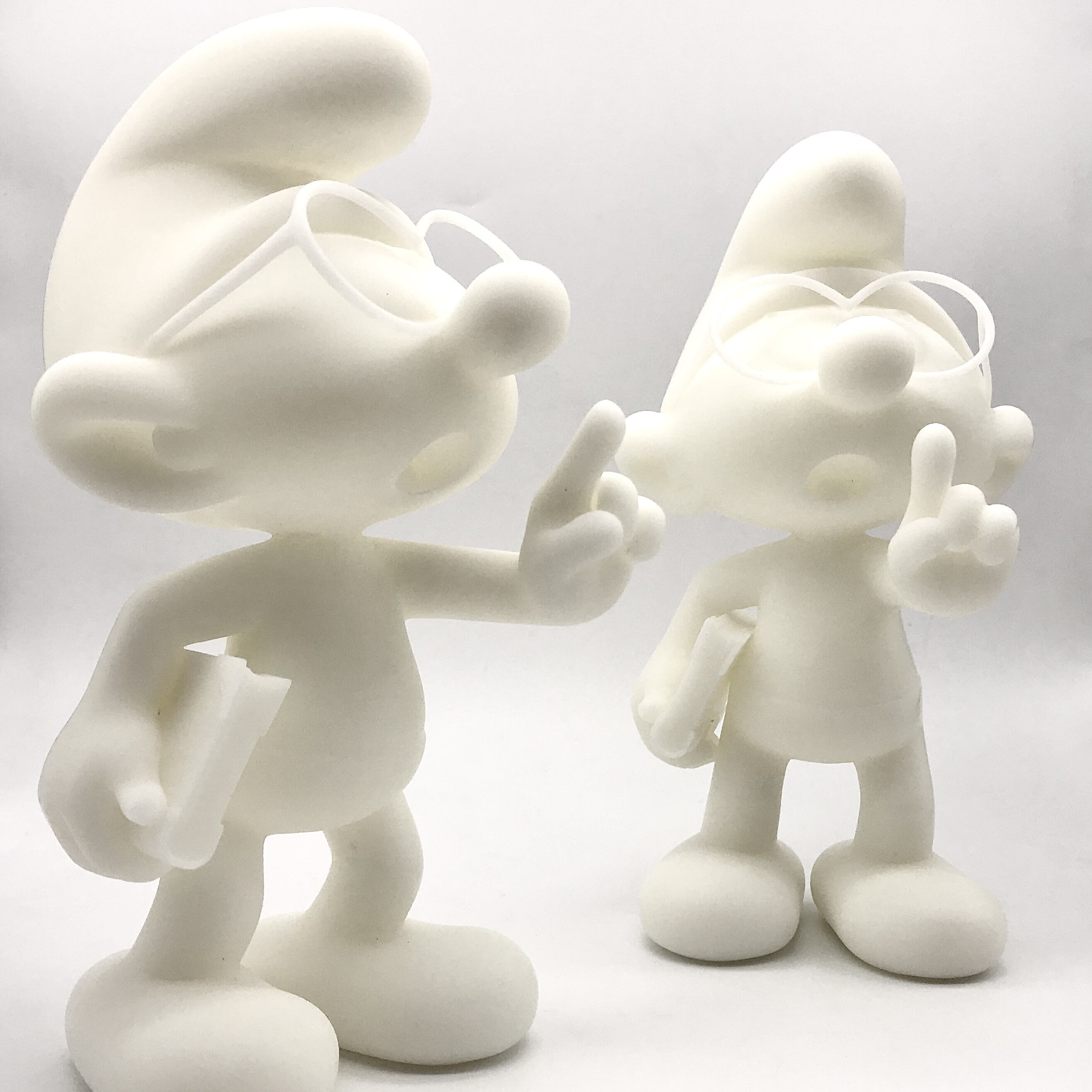
Modern manufacturing demands rapid prototyping and flexible production solutions that can adapt to changing market requirements. Traditional manufacturing methods often fall short when businesses need to iterate quickly on designs or produce custom components in small quantities. This challenge has led many companies to embrace advanced additive manufacturing technologies, particularly SLA flexible 3D printing services that offer unprecedented precision and versatility in product development.

The stereolithography process represents a breakthrough in additive manufacturing, enabling companies to transform digital designs into physical prototypes and production parts with remarkable speed and accuracy. Unlike conventional manufacturing techniques that require expensive tooling and lengthy setup times, SLA flexible 3D printing services provide immediate access to production capabilities that can handle complex geometries and intricate details that would be impossible or cost-prohibitive using traditional methods.
Understanding Stereolithography Technology and Its Advantages
Precision Engineering Through Photopolymerization
Stereolithography operates on the principle of photopolymerization, where liquid resin is selectively cured using precisely controlled laser light. This process enables the creation of parts with layer resolutions as fine as 25 microns, delivering surface finishes and dimensional accuracy that rival injection-molded components. The technology excels in producing complex internal channels, undercuts, and delicate features that would require multiple assembly steps in traditional manufacturing.
The controlled curing process ensures consistent material properties throughout the part, eliminating the warpage and stress concentrations often associated with other manufacturing methods. This precision makes SLA flexible 3D printing services particularly valuable for industries requiring tight tolerances, such as aerospace, medical devices, and precision instrumentation.
Material Versatility and Performance Characteristics
Modern stereolithography systems support an extensive range of photopolymer resins, each engineered for specific applications and performance requirements. From rigid, engineering-grade plastics that mimic ABS and polycarbonate to flexible elastomers suitable for gaskets and seals, the material options continue to expand as resin chemistry advances.
Specialized formulations include biocompatible resins for medical applications, high-temperature materials for automotive testing, and transparent resins for optical components. This diversity enables SLA flexible 3D printing services to serve multiple industries with tailored solutions that meet specific performance criteria and regulatory requirements.
Accelerating Product Development Cycles
Rapid Iteration and Design Validation
The most significant advantage of incorporating SLA flexible 3D printing services into product development lies in their ability to compress traditional design-test-refine cycles from weeks or months into days. Engineers can upload CAD files and receive physical prototypes within 24-48 hours, enabling immediate tactile evaluation and functional testing that reveals design flaws invisible in digital simulations.
This rapid turnaround facilitates multiple design iterations without the financial burden of tooling modifications or minimum order quantities. Development teams can explore alternative concepts, test different material properties, and validate form-fit-function requirements early in the design process, ultimately reducing time-to-market and development costs.
Collaborative Design Enhancement
Physical prototypes produced through SLA flexible 3D printing services serve as powerful communication tools that bridge the gap between technical teams and stakeholders. While CAD models require specialized software and technical expertise to interpret, physical prototypes enable intuitive evaluation by marketing teams, customers, and end-users who can provide valuable feedback on ergonomics, aesthetics, and functionality.
This collaborative approach often reveals requirements and preferences that were not apparent during the digital design phase, leading to products that better meet market needs and user expectations. The ability to produce multiple variants simultaneously allows for comparative evaluation and A/B testing with focus groups or customer panels.
Custom Production and Low-Volume Manufacturing
Economic Viability for Specialized Applications
While traditional manufacturing excels at high-volume production, SLA flexible 3D printing services offer compelling economics for custom and low-volume applications where tooling costs would be prohibitive. Industries such as medical devices, aerospace, and specialized industrial equipment frequently require unique components in quantities ranging from single prototypes to hundreds of units.
The per-part cost structure of stereolithography remains relatively constant regardless of production volume, making it economically attractive for customized products, spare parts for legacy equipment, and specialized tooling. This economic model enables businesses to offer personalized products and maintain inventory for slow-moving parts without significant capital investment.
On-Demand Manufacturing and Supply Chain Benefits
SLA flexible 3D printing services support on-demand manufacturing strategies that reduce inventory carrying costs and minimize supply chain risks. Companies can maintain digital inventories of part designs and produce physical components only when needed, eliminating obsolescence risks and reducing working capital requirements.
This approach proves particularly valuable for companies with global operations, as digital files can be transmitted instantly to local service providers, reducing shipping costs and delivery times while maintaining quality consistency across different geographic locations. The ability to produce parts locally also enhances supply chain resilience against disruptions.
Industry Applications and Success Stories
Medical Device Innovation
The medical device industry has embraced SLA flexible 3D printing services for applications ranging from surgical planning models to custom prosthetics and dental appliances. The biocompatible resins and high precision achievable with stereolithography enable the production of patient-specific devices that improve treatment outcomes and reduce surgical risks.
Orthopedic surgeons utilize anatomically accurate models produced from patient CT scans to plan complex procedures and practice surgical techniques before entering the operating room. Custom surgical guides and templates ensure precise placement of implants and reduce procedure times, directly benefiting patient care and hospital efficiency.
Automotive and Aerospace Applications
Automotive manufacturers leverage SLA flexible 3D printing services for functional prototyping of interior components, aerodynamic testing models, and custom tooling for assembly lines. The ability to produce parts with automotive-grade materials enables realistic testing of fit, finish, and durability under actual operating conditions.
Aerospace companies utilize the technology for lightweight structural components, complex ducting systems, and specialized tooling that would be impossible to manufacture using conventional methods. The design freedom offered by stereolithography enables engineers to optimize parts for weight reduction and performance enhancement while maintaining structural integrity.
Quality Assurance and Process Optimization
Dimensional Accuracy and Surface Quality
Professional SLA flexible 3D printing services maintain strict quality control protocols to ensure consistent dimensional accuracy and surface finish across production runs. Advanced calibration procedures, environmental controls, and post-processing techniques ensure that parts meet specified tolerances and aesthetic requirements.
Quality assurance extends beyond dimensional verification to include material property validation, surface roughness measurement, and functional testing where applicable. Comprehensive documentation and traceability systems support quality management requirements in regulated industries such as medical devices and aerospace.
Post-Processing and Finishing Techniques
The capabilities of SLA flexible 3D printing services extend beyond the printing process itself to include sophisticated post-processing operations that enhance part performance and appearance. UV curing ensures complete resin polymerization, while precision machining can achieve critical dimensions and surface finishes that exceed the native capabilities of the printing process.
Advanced finishing options include painting, plating, and texture application that enable printed parts to match the appearance of production components. These finishing capabilities make stereolithography suitable for end-use parts in customer-facing applications where aesthetics are as important as functionality.
Future Trends and Technology Evolution
Advanced Materials Development
The continuous development of new photopolymer resins expands the application range of SLA flexible 3D printing services into increasingly demanding markets. Research focuses on materials with enhanced mechanical properties, thermal stability, and chemical resistance that rival traditional engineering plastics and metals.
Emerging material categories include conductive resins for electronic applications, ceramic-filled composites for high-temperature environments, and bio-based formulations that support sustainability initiatives. These developments position stereolithography as a viable alternative to traditional manufacturing for an ever-expanding range of applications.
Automation and Industry 4.0 Integration
The integration of SLA flexible 3D printing services with Industry 4.0 concepts enables automated production workflows that minimize human intervention while maximizing throughput and consistency. Advanced software systems manage print queues, optimize build orientations, and predict maintenance requirements to ensure continuous operation.
Artificial intelligence and machine learning algorithms analyze production data to identify optimization opportunities and predict potential quality issues before they occur. This predictive capability enhances reliability and reduces waste while enabling service providers to offer more competitive pricing and faster delivery times.
FAQ
What are the typical lead times for SLA flexible 3D printing services?
Lead times for SLA flexible 3D printing services typically range from 24-48 hours for simple prototypes to 5-7 business days for complex parts requiring extensive post-processing. Rush services can often deliver parts within 12-24 hours for urgent requirements, though this may involve additional fees. The actual timeline depends on part complexity, material selection, quantity, and current production queue status.
How do I determine if my design is suitable for stereolithography production?
Most designs created for injection molding or machining are suitable for stereolithography, though some modifications may optimize results. Key considerations include minimum wall thickness, support structure requirements, and surface finish expectations. Professional service providers offer design review services that identify potential issues and suggest improvements before production begins, ensuring optimal results and cost efficiency.
What post-processing options are available to enhance part quality?
Post-processing options for SLA parts include UV curing for complete polymerization, precision machining for critical dimensions, sanding and polishing for improved surface finish, and various coating applications. Advanced options include electroplating, painting with automotive-grade finishes, and texture application. The specific post-processing requirements depend on the intended application and performance criteria for the finished parts.
Can SLA flexible 3D printing services handle production quantities?
Yes, SLA services can efficiently handle production quantities ranging from single prototypes to several thousand units, depending on part size and complexity. The technology excels in low to medium volume production where tooling costs would be prohibitive for traditional manufacturing. For larger quantities, multiple printers can operate simultaneously to maintain reasonable delivery schedules while preserving the economic advantages of additive manufacturing.